Category: News

  • A Quiet Giant Falls

    A Quiet Giant Falls

    When Charles Rangel walked the halls of Congress, he did so with the bearing of someone shaped long before Washington by Harlem streets and wartime service. His passing at 94 marks the end of one of the longest and most consequential congressional careers in modern American history.
    Rangel was first elected to the U.S. House of Representatives in 1970, representing New York’s 13th Congressional District — a seat he held for nearly five decades. A decorated Korean War veteran, he brought to public office a perspective grounded in both military service and the lived realities of the community that raised him.

    For Rangel, issues such as civil rights, affordable housing, healthcare access, and economic opportunity were not abstract policy debates. They were rooted in the everyday struggles of his constituents. Throughout his tenure, he focused on legislation aimed at job creation, urban investment, and expanding opportunity in underserved communities.

    As a founding member of the Congressional Black Caucus and later chair of the powerful House Ways and Means Committee, Rangel played a significant role in shaping tax policy and social legislation. His influence extended beyond party lines, even as he remained a steadfast Democrat.

    Colleagues often described him as both forceful and personable — someone who could argue intensely on the House floor and share stories moments later. He frequently reminded younger lawmakers that public office was a responsibility entrusted by voters, not a platform for personal visibility.

    His long career was not without controversy; like many figures who serve for decades, he faced ethics investigations later in life. Yet his supporters argue that his broader legacy rests on sustained advocacy for urban communities and expanded political representation.

    With his death, Congress loses one of its last links to a generation of lawmakers shaped by the civil rights movement and postwar America. His career spanned eras of dramatic political transformation, from the 1970s through the 2010s.

    Charles Rangel’s legacy will ultimately be measured not only by committee leadership or legislative milestones, but by the communities he represented for nearly half a century — and the imprint he left on the institution of Congress itself.


  • A short-form video circulating on social media is drawing attention for its focus on the most intense types of pain the human body can experience. The clip, labeled “Worst Pains the Human Body Can Experience – Part 4,” features a presenter explaining and highlighting some of the most severe physical conditions known for causing extreme discomfort.

    Set against a digital background showing the human skeleton and spine, the video appears to be part of an ongoing series aimed at educating viewers about medical conditions associated with high levels of pain. While the exact conditions discussed in this segment are not specified in the image alone, similar content often includes examples such as kidney stones, severe burns, or nerve-related pain.

    The video has gained traction online, with users engaging in discussions about personal experiences and the accuracy of such rankings. Experts generally note that pain perception can vary widely from person to person, depending on individual tolerance and medical circumstances.

    As health-related content continues to trend on social platforms, viewers are encouraged to approach such videos with curiosity, while also relying on professional medical advice for accurate information.

  • A Quiet Giant Falls

    A Quiet Giant Falls

    When Charles Rangel walked the halls of Congress, he did so with the bearing of someone shaped long before Washington by Harlem streets and wartime service. His passing at 94 marks the end of one of the longest and most consequential congressional careers in modern American history.
    Rangel was first elected to the U.S. House of Representatives in 1970, representing New York’s 13th Congressional District — a seat he held for nearly five decades. A decorated Korean War veteran, he brought to public office a perspective grounded in both military service and the lived realities of the community that raised him.

    For Rangel, issues such as civil rights, affordable housing, healthcare access, and economic opportunity were not abstract policy debates. They were rooted in the everyday struggles of his constituents. Throughout his tenure, he focused on legislation aimed at job creation, urban investment, and expanding opportunity in underserved communities.

    As a founding member of the Congressional Black Caucus and later chair of the powerful House Ways and Means Committee, Rangel played a significant role in shaping tax policy and social legislation. His influence extended beyond party lines, even as he remained a steadfast Democrat.

    Colleagues often described him as both forceful and personable — someone who could argue intensely on the House floor and share stories moments later. He frequently reminded younger lawmakers that public office was a responsibility entrusted by voters, not a platform for personal visibility.

    His long career was not without controversy; like many figures who serve for decades, he faced ethics investigations later in life. Yet his supporters argue that his broader legacy rests on sustained advocacy for urban communities and expanded political representation.

    With his death, Congress loses one of its last links to a generation of lawmakers shaped by the civil rights movement and postwar America. His career spanned eras of dramatic political transformation, from the 1970s through the 2010s.

    Charles Rangel’s legacy will ultimately be measured not only by committee leadership or legislative milestones, but by the communities he represented for nearly half a century — and the imprint he left on the institution of Congress itself.

  • A Quiet Giant Falls

    A photo circulating on social media has sparked curiosity and discussion among viewers. The image features a group of young women posing together in what appears to be a casual indoor setting, possibly during a social gathering or celebration. The scene suggests a moment of friendship and leisure, with one individual holding a bottle, adding to the impression of a relaxed, informal event.

    In the lower part of the image, a man appears to be addressing the audience directly, as if recording a video or sharing commentary. His presence indicates that the image may be part of a reaction-style post, where older photos are revisited and discussed in a modern context.

    The combination of past and present elements in a single frame has drawn attention online, with many users speculating about the story behind the photo and the message being conveyed. While the exact context remains unclear, the image highlights the growing trend of revisiting memories and sharing them through social media platforms.

  • Last Known Photos of Icons Before Their Passing – A Look at Their Final Moments A new wave of social media content is drawing attention to the final known photographs of some of the world’s most recognized public figures. These videos present a collection of images captured shortly before their passing, offering viewers a rare and emotional glimpse into the last moments of well-known icons. The content often combines visuals with brief narratives, explaining where and when the photos were taken, as well as the circumstances surrounding the individuals’ final days. For many viewers, these images serve as a powerful reminder that even the most celebrated figures share the same human experiences as everyone else. While the videos aim to inform and engage audiences, experts advise caution when interpreting such content. Not all details shared on social media are fully verified, and some stories may be simplified or dramatized for effect. Despite this, the trend continues to attract widespread attention, as audiences remain interested in the personal and untold stories behind the lives of influential figures.

    A new wave of social media content is drawing attention to the final known photographs of some of the world’s most recognized public figures. These videos present a collection of images captured shortly before their passing, offering viewers a rare and emotional glimpse into the last moments of well-known icons.

    The content often combines visuals with brief narratives, explaining where and when the photos were taken, as well as the circumstances surrounding the individuals’ final days. For many viewers, these images serve as a powerful reminder that even the most celebrated figures share the same human experiences as everyone else.

    While the videos aim to inform and engage audiences, experts advise caution when interpreting such content. Not all details shared on social media are fully verified, and some stories may be simplified or dramatized for effect.

    Despite this, the trend continues to attract widespread attention, as audiences remain interested in the personal and untold stories behind the lives of influential figures.

  • Man Turns to AI for 2028 US Presidential Prediction and Receives a Jaw-Dropping Response

    Man Turns to AI for 2028 US Presidential Prediction and Receives a Jaw-Dropping Response

    A new AI-driven simulation of the 2028 presidential election is drawing attention across social media and political forums after YouTube channel Election Time collaborated with Grok AI, the artificial intelligence platform developed by Elon Musk’s xAI, to produce a full Electoral College forecast. The video explores a hypothetical matchup between former Vice President Kamala Harris and incumbent Vice President JD Vance, walking viewers through early primary polling, betting market odds, and state-by-state projections to reveal a final electoral map.
    The host explains the methodology in detail, noting how the AI uses historical voting patterns, demographic shifts, recent election trends, and polling data to simulate potential outcomes, offering a unique perspective on what the race could look like if these two figures were the nominees. Harris, coming off a loss to Donald Trump in 2024, is shown regaining traction among Democratic voters, while Vance dominates the Republican primary, reflecting the strength of incumbency and the impact of recent GOP gains in key states. This simulation, though hypothetical, has captured public curiosity because it combines political forecasting with advanced AI modeling, providing an early glimpse into how strategic and demographic factors could shape the 2028 contest. The discussion emphasizes that the simulation is not a prediction but a tool for understanding patterns and possibilities in U.S. presidential politics.

    In the simulation’s final projection, JD Vance secures a decisive 326 electoral votes, winning not only all Trump-held states from 2024 but also narrowly capturing Minnesota and New Hampshire, while Harris’s stronghold remains largely concentrated along the West Coast and portions of the Northeast, highlighting structural challenges for Democrats and the central role of battleground states in shaping the election’s outcome.

  • My dad disowned me by text the day before my graduation because I didn’t invite his new wife’s two children. My mother, brother, and three aunts all took his side. Ten years later.

    My dad disowned me by text the day before my graduation because I didn’t invite his new wife’s two children. My mother, brother, and three aunts all took his side. Ten years later.

    My father cut me off by text the day before my graduation because I didn’t invite his new wife’s two kids. My mother, my brother, and three aunts all sided with him. Ten years later, he needed my signature on a single document. I answered with just four words… and his entire retirement plan unraveled…
    My phone began buzzing at 6:14 a.m. while I was pouring coffee, and by the fourth call, I knew it had to be either an emergency or desperation.

    It was my father.

    I let it go to voicemail.

    A moment later, a message lit up my screen.
    I need your signature today. Call me NOW.

    Ten years. A full decade since he sent that last message the night before my college graduation: If those girls aren’t invited, neither am I. And if you go through with this, don’t call me your father again.

    He hadn’t just stayed away. He made sure my mother, my brother, and half the family stayed away too. The next morning, I crossed that stage with trembling hands and an empty row where my family should have been.

    And now, after ten years of silence, he needed something.

    I stared at his message, then typed four words.

    Not without full disclosure.

    The typing dots appeared immediately. Disappeared. Then came back.

    Then my phone rang again.

    This time, I picked up.

    “Emily,” he said, breathless, his voice thinner than I remembered. “This is not the time for games.”

    “Funny,” I replied. “That’s exactly what I was told the day before graduation.”

    He exhaled sharply. “I need you to sign a transfer affidavit. Today. There’s a closing at noon.”

    “A closing for what?”

    Silence.

    Then, cautiously, “Your grandfather’s property.”

  • HERE WE GO: Iran just responded back…

    In a sharp escalation of tensions in the Middle East, the United States and Israel carried out coordinated airstrikes on targets inside Iran early Saturday, marking one of the most serious confrontations between the countries in decades.
    According to U.S. officials, the strikes were part of an operation aimed at degrading Iran’s military capabilities and limiting what Washington and its allies describe as threats tied to missile programs, regional proxy networks, and nuclear-related infrastructure. The targets reportedly included facilities associated with the Islamic Revolutionary Guard Corps (IRGC), as well as missile sites, air-defense systems, and other strategic installations across several provinces, including areas near Tehran, Isfahan, Qom, Kermanshah, and Karaj.

    Political leaders in Washington and Jerusalem framed the operation as a preventive measure. U.S. President Donald Trump said the strikes were intended to address what he described as “imminent threats,” while Israeli Prime Minister Benjamin Netanyahu argued the action was necessary to counter what Israel views as a long-standing strategic danger posed by Iran’s military development.For now, governments and observers around the world are watching closely, aware that the most dangerous phase of any conflict is often the period immediately following the first major escalation. In such moments, the language used by leaders—and the restraint they choose to exercise—can be as consequential as the military actions themselves.

    History shows that confrontations of this scale often stand at a crossroads between further escalation and cautious diplomacy. Which path emerges will depend not only on strength, but also on the willingness of those involved to recognize the immense human and global stakes tied to every next move.

  • Legendary Actor and Oscar Pioneer Louis Gossett Jr. Dies

    Legendary Actor and Oscar Pioneer Louis Gossett Jr. Dies

    The announcement did not arrive with fanfare. It moved quietly through Hollywood, gathering weight as tributes followed—each one reflecting the magnitude of a career that reshaped American film and television. Louis Gossett Jr., a pioneering actor whose work broke racial barriers and redefined authority on screen, has died at the age of 87.His family confirmed his passing in a statement shared with PEOPLE, saying he died peacefully Thursday night in Santa Monica, California. No cause of death has been disclosed. “We are overwhelmed by the love being shown,” the family said, requesting privacy as they mourn.

    From Brooklyn Beginnings to Broadway

    Born in New York City, Gossett showed an early gift for performance that would soon open unexpected doors. While still a student at Abraham Lincoln High School, he was cast in the Broadway production Take a Giant Step in 1953—his first professional role. Producers at the time had been searching high schools for a young Black lead, unable to find what they needed through traditional industry channels.With Gossett’s passing, the industry loses more than a celebrated actor—it loses a pioneer. From Broadway stages to Oscar history, his work challenged limits and expanded representation at every turn. His influence remains woven into American storytelling, carried forward by the generations he inspired and the paths he made possible

  • During the divorce, my wife kept the house. “Pick up your stuff by Friday.” I arrived at night unannounced

    During the divorce, my wife kept the house. “Pick up your stuff by Friday.” I arrived at night unannounced

    During the divorce, my wife kept the house. “Pick up your stuff by Friday.” I arrived at night unannounced
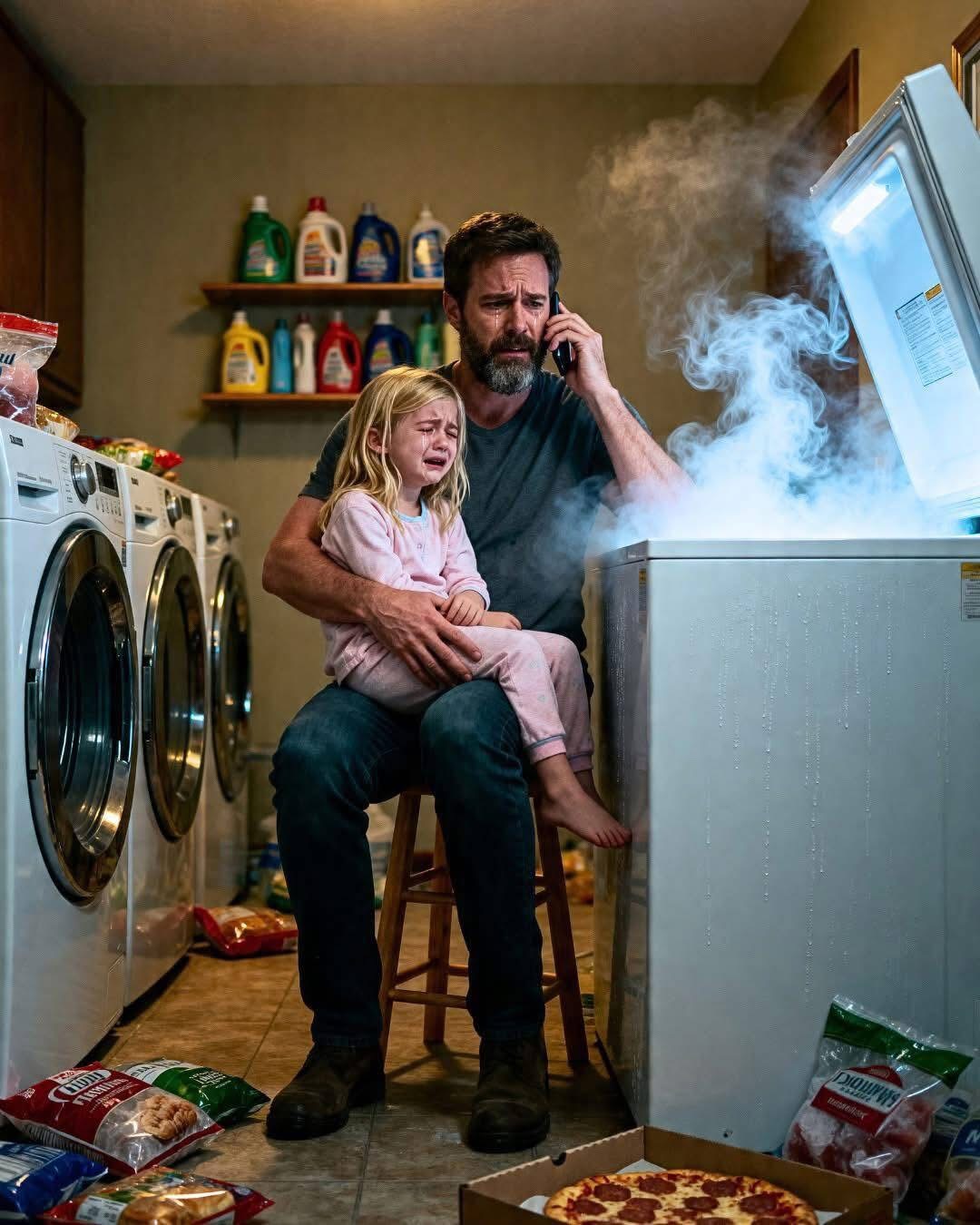
    It came thin and warped, like the sound itself had frozen solid and had to break apart before it could become a voice. For one suspended second I tried to turn it into anything else. A cat. A television somewhere in the house. The old garage hinges complaining in the cold. Anything except what it really was.
    I was standing in the garage of the house that had once been mine, the house where I had painted walls, refinished cabinets, built a crib, and marked my daughter’s height in pencil on the pantry frame.Now it belonged to my ex-wife by decree, by signatures, by the quiet bureaucratic violence of divorce. I had only come to collect the last boxes of my life before they were thrown out.

    It was 9:47 on a Thursday night in October. The air already carried that metallic Colorado chill that meant winter was waiting just beyond sight. The divorce had been final for three weeks.

    On paper it had been clean. We had signed, divided assets, agreed to custody, used words like equitable and cooperative while attorneys guided our pens across legal lines. In reality, it had hollowed me out.

    Taylor got the house. I got a one-room apartment over a laundromat, a futon that smelled faintly of detergent and somebody else’s cigarettes, and every other weekend with our daughter as long as everyone, as Taylor liked to say, stayed civil.

    That morning she had texted me: Pick up your stuff by Friday. I’m throwing out whatever’s left.

    No softness. No punctuation. Just a final notice.

    Then she’ll come inside trailing cold air and grass and childhood, and the house will close around us not as a trap, but as shelter. And I will be grateful, again, for every indifferent force in the universe that put me there in time to hear her scream.