Author: admin

  • Man Discusses “Biblical Tomb Still Visible Today” in Viral Video

    A video circulating on social media shows a man speaking about what he claims to be a biblical tomb that can still be seen today. The clip, posted under a “Daily story” account, has quickly gained attention, drawing thousands of likes and comments.

    The caption accompanying the video reads “Biblical tomb site #bible #history,” suggesting a focus on historical and religious significance. While the exact location or authenticity of the tomb is not confirmed in the clip, the topic has sparked curiosity among viewers interested in ancient history and biblical sites.

    Experts often caution that many such claims require careful archaeological verification. Nonetheless, videos like this continue to attract widespread interest, highlighting the enduring fascination with biblical history in the digital age.

  • Viral Social Media Trend Highlights Rare Photos of Historical Figures

    A recent social media post is gaining attention online, featuring a short video titled “Historical Figures Who Lived Long Enough to Be Photographed – Part 2.”

    The video, shared through a daily facts-style account, presents a series of historical personalities who lived during the early days of photography, allowing their real images to be preserved rather than relying solely on paintings or written descriptions.

    In the clip, a presenter introduces the topic while engaging viewers with intriguing visuals and concise storytelling. The format has quickly attracted interest from audiences who enjoy educational and history-based content on platforms like Instagram and TikTok.

    Such content reflects a growing trend where social media is used not only for entertainment but also as a tool to share lesser-known historical facts in a simple and engaging way.

    The video is part of an ongoing series, suggesting that more historical insights and rare photographic records may be featured in future posts.

  • Social Security COLA Update 2025

    Social Security COLA Update 2025

    Millions feel ambushed. The 2025 Social Security raise was sold as relief, but for many, it now lands like a cold financial slap. A 3.2% boost sounds hopeful on paper—until it crashes into rent spikes, brutal pharmacy bills, and grocery totals that feel like misprints.
    Retirees and disabled Americans are staring at their statements, whispering the same question: “How am I supposed to stret…For the average retired worker, the 3.2% Cost-of-Living Adjustment means about $50 more a month. Disability, survivor, and SSI beneficiaries will see increases too. But in a world where a single prescription can swallow that entire amount, and a routine grocery run devours the rest, the raise feels less like progress and more like barely treading water. It’s help, yes—but help measured in inches, not miles.

    Behind every percentage point is a life built on work, sacrifice, and promises that Social Security would be there when paychecks stopped. Instead, people are forced to become accountants of scarcity, deciding which necessity to sacrifice next. The cruelest part isn’t just the smallness of the increase; it’s the quiet realization that even when the system “works,” it still leaves millions one bad month away from disaster.

  • Ancient Wonder of China: The Porcelain Tower of Nanjing

    NANJING, CHINA — One of the most remarkable architectural achievements of the 15th century, the Porcelain Tower of Nanjing, continues to capture global attention centuries after its construction.

    Built in 1431 during the reign of the Ming Dynasty, the towering pagoda stood in the historic city of Nanjing and was widely regarded as one of the most beautiful structures in the world at the time. The tower was constructed using white porcelain bricks, giving it a unique glow under sunlight, while lanterns lit up the structure at night, creating a breathtaking visual effect.

    Historical records describe the monument as a symbol of cultural and architectural brilliance, attracting admiration from travelers and scholars alike. Its intricate design and impressive height made it a standout landmark in ancient China.

    However, the original tower was destroyed in the 19th century during periods of conflict, leaving behind only historical accounts and artistic depictions of its former glory.

    Today, the Porcelain Tower remains a powerful reminder of China’s rich heritage and continues to inspire historians and architects around the world.

  • Archaeological Discoveries Shed Light on Biblical Sites

    Recent discussions on social media have brought renewed attention to archaeological evidence مرتبط with locations mentioned in the Bible. In a short video circulating online, a content creator highlights various discoveries that are believed to support the historical existence of biblical sites.

    According to the video, archaeologists have uncovered ancient ruins, inscriptions, and artifacts in regions traditionally associated with biblical narratives. These findings, researchers say, provide valuable insight into the cultural and historical context of the time periods described in religious texts.

    While some scholars argue that such discoveries strengthen the historical credibility of certain biblical accounts, others emphasize the need for careful interpretation. Archaeology, they note, often reveals complex histories that may not always align perfectly with religious traditions.

    The topic continues to spark interest among historians, theologians, and the general public, as new discoveries and analyses contribute to an ongoing dialogue about the intersection of faith, history, and science.

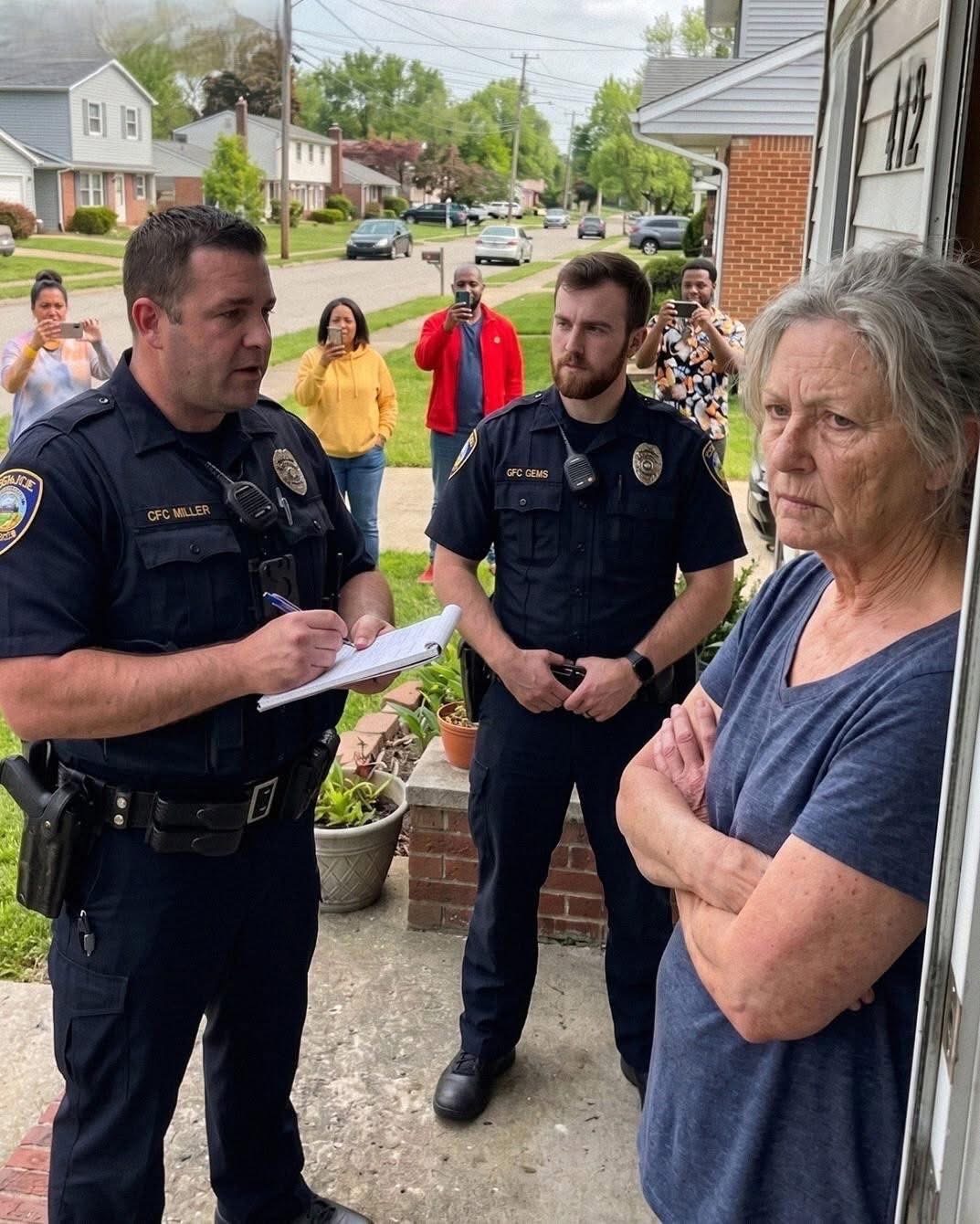
  • NEIGHBORS CALLED THE COPS ON MY MOTHER FOR ALWAYS BRINGING “STOLEN ORPHANS” TO HER HOUSE — THE TRUTH BEHIND THIS MADE THE WHOLE NEIGHBORHOOD CRY. Ever since my father passed away, my mother’s world has been small: her garden, her two dogs, and her three cats. I live and work several states away, but we talk every Sunday. Or we did, until the rumors started. Sarah, a childhood friend whose mother still lives next door, called me in a panic. “Ashley, the neighborhood is terrified. They’re saying your mom is… snatching children. Bringing ‘stolen orphans’ into her house at night. People see her carrying bundles inside, but they never see them leave.” I confronted Mom on the phone, but she was dismissive. “I don’t have time for their gossip,” she snapped. Her silence felt like a confession, and my worry turned into a physical ache. Driven by dread, I hopped on the first flight back. When my taxi pulled up to the curb, the scene was a nightmare. Two police officers were confronting my mother on the porch. She stood there, arms crossed tightly over her chest, her face pale. Surrounding her were the neighbors, their phones out, recording every second of her “downfall.” “She brings them here in the dark!” someone shouted from the sidewalk. “She’s stealing orphans!” I rushed to her side just as an officer held up a piece of paper. “We have a warrant to search the house, ma’am.” Mom didn’t flinch. She simply looked at the crowd of people she’d known for decades and said, “You are all so very wrong.” She stepped back, gesturing for them to enter. I followed the officers through the front door, my hands shaking. I expected shadows and secrets, but as we turned the corner into the living room, I stopped dead in my tracks. I was stunned by what I saw.

    NEIGHBORS CALLED THE COPS ON MY MOTHER FOR ALWAYS BRINGING “STOLEN ORPHANS” TO HER HOUSE — THE TRUTH BEHIND THIS MADE THE WHOLE NEIGHBORHOOD CRY. Ever since my father passed away, my mother’s world has been small: her garden, her two dogs, and her three cats. I live and work several states away, but we talk every Sunday. Or we did, until the rumors started. Sarah, a childhood friend whose mother still lives next door, called me in a panic. “Ashley, the neighborhood is terrified. They’re saying your mom is… snatching children. Bringing ‘stolen orphans’ into her house at night. People see her carrying bundles inside, but they never see them leave.” I confronted Mom on the phone, but she was dismissive. “I don’t have time for their gossip,” she snapped. Her silence felt like a confession, and my worry turned into a physical ache. Driven by dread, I hopped on the first flight back. When my taxi pulled up to the curb, the scene was a nightmare. Two police officers were confronting my mother on the porch. She stood there, arms crossed tightly over her chest, her face pale. Surrounding her were the neighbors, their phones out, recording every second of her “downfall.” “She brings them here in the dark!” someone shouted from the sidewalk. “She’s stealing orphans!” I rushed to her side just as an officer held up a piece of paper. “We have a warrant to search the house, ma’am.” Mom didn’t flinch. She simply looked at the crowd of people she’d known for decades and said, “You are all so very wrong.” She stepped back, gesturing for them to enter. I followed the officers through the front door, my hands shaking. I expected shadows and secrets, but as we turned the corner into the living room, I stopped dead in my tracks. I was stunned by what I saw.

    For a long time, I thought my mother had settled into a life so quiet it barely made a sound.
    After my father died, everything about her world seemed small and predictable from a distance. She had her garden, her two dogs, her impossible cats, and the same routines that made every Sunday phone call feel comforting. She would tell me what was blooming, what she had cooked, which neighbor had stopped by. Nothing dramatic. Nothing strange.

    That was the version of her life I carried around in my head.

    Steady. Gentle. Safe.

    Then the calls started feeling different.

    Not obvious at first. Just a slight change in tone, a hesitation where there hadn’t been one before. And then Sarah called.

    We hadn’t talked in months, so when I saw her name, I nearly ignored it. Something made me answer anyway.

    She didn’t even say hello.

    “Ashley, the whole neighborhood is panicking. They think your mom is taking children. People say they’ve seen her bringing kids into the house at night—bundles, bags, something—and no one ever sees them leave.”

    For a second, I honestly thought she had to be joking.

    I laughed once. Short, confused. But Sarah didn’t laugh.

    “My mom’s been watching,” she said. “Everyone has. They’re talking about calling the police. You need to come home.”

    The unease settled into me right then, cold and immediate.

  • Principal Summons Mom After Daughter Secretly Buys Sneakers for a Classmate

    Principal Summons Mom After Daughter Secretly Buys Sneakers for a Classmate

    The phone call came in the middle of a hectic Tuesday, cutting through the noise of my lunch break like a sharpened blade. When I saw the elementary school’s caller ID, my stomach did a slow, sickening roll. It is a universal instinct for a mother; a call from the principal rarely precedes good news.
    The voice on the other end was tense, clipped, and heavy with an urgency that made my hands tremble as I grabbed my car keys. He told me Emma wasn’t hurt, but that she was “involved” in something serious and that I needed to get there immediately. As I navigated the midday traffic, my mind raced through every possible scenario. Emma was twelve, a girl whose heart had always been too big for her own good, but in a world that had been cruel to our family, I worried that her kindness had finally led her into a trap.

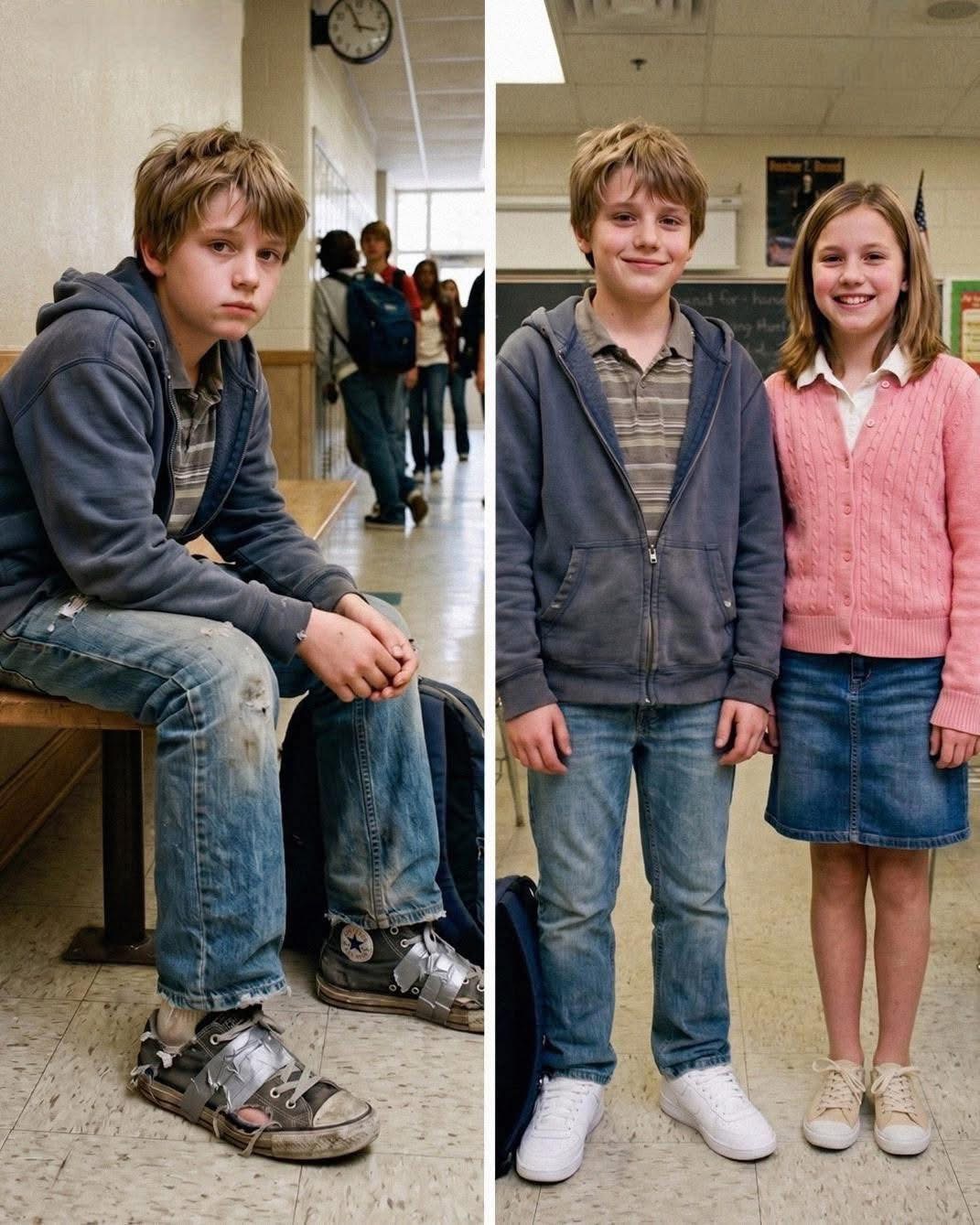
    Just twenty four hours earlier, I had discovered the shattered remains of her ceramic piggy bank on her bedroom floor. When I questioned her, she had looked at me with a mix of defiance and shame, admitting she had spent every cent she had saved over the last few months—birthday money, chore earnings, and even her lunch allowance. She had seen a new boy in her class, Caleb, trying to keep his soles attached to his shoes with layers of duct tape. Emma hadn’t asked me for help because she knew things were tight for us, too. Instead, she had quietly shouldered the burden of his dignity, purchasing a brand new pair of sneakers and giving them to him in secret. I had been overwhelmed with pride, seeing in her the same selfless spirit her father, Joe, had possessed before his world—and his heart—collapsed under the weight of a public scandal.

  • My parents blocked all my cards and kicked me out barefoot with nothing but a wallet in my pocket

    My parents blocked all my cards and kicked me out barefoot with nothing but a wallet in my pocket

    That’s the part people react to the most when I tell this story. Being kicked out is cruel enough—but sending your own daughter outside barefoot turns it into something almost theatrical.
    It happened just after nine on a Thursday in early March, at our house outside Dallas. The argument itself was trivial, like many family conflicts are.
    My father demanded access to my banking app so he could “review my contributions” from freelance design work. I was twenty-eight, temporarily living at home after a contract ended, paying what they called “support money” while trying to rebuild my life. In return, I had a small room, constant monitoring, and the reminder that everything I had could be taken away at any moment.
    That night, for the first time, I said no.
    My father stared at me as if I had crossed a line I could never uncross.
    “Excuse me?”
    “No,” I repeated. “You don’t need access to my accounts.”
    My mother’s expression hardened instantly. She had the kind of beauty that grew sharper when she was angry, making her cruelty look like discipline to outsiders.
    “Then maybe you don’t deserve the privileges this family gives you.”
    I laughed once. By then, those “privileges” meant shared internet I paid for, groceries I mostly bought, and a cramped room barely big enough for my suitcase.
    My father pulled out his phone.

    They had expected me to come back, broken by hunger and cold.
    Instead, they found me standing strong—behind a gate they could not enter, wearing shoes someone helped me buy because they saw a future in me my own parents never did.

  • Amazing places that no longer exist.

    A short video circulating on Instagram has captured attention with its intriguing theme, “Amazing places that no longer exist.” The clip features a man speaking against a dramatic green-lit background, introducing a series that appears to explore lost or destroyed locations around the world.

    The video, shared as part of an Instagram story, suggests a focus on historical sites, natural wonders, or man-made landmarks that have disappeared over time due to disasters, urban development, or other causes. While the clip itself does not provide specific details, it serves as a teaser aimed at drawing viewers into a deeper exploration of these vanished places.

    Social media users have increasingly shown interest in content that highlights forgotten history and lost environments, making such videos both educational and engaging for a wide audience.

  • Tomato consumption can produce this effect on the body, according to some studies

    Tomato consumption can produce this effect on the body, according to some studies

    Tomatoes are so common in everyday cooking that they’re easy to overlook. They show up in everything—from simple salads to slow-cooked sauces—quietly blending into meals without much thought. Yet behind that familiar flavor is a combination of nutrients and compounds that can have a noticeable impact on the body over time.

    What makes tomatoes particularly interesting is not just their versatility, but what they contain. One of the most studied components is lycopene, the pigment responsible for their deep red color. More than just a visual trait, lycopene acts as a powerful antioxidant. In simple terms, it helps the body deal with oxidative stress—an internal process linked to aging and inflammation.

    An intriguing detail is that lycopene becomes easier for the body to absorb when tomatoes are cooked. This means that foods like tomato sauces, soups, or even lightly sautéed tomatoes may offer more accessible benefits than raw slices alone. It’s a small shift in preparation that can make a meaningful difference.From a health perspective, tomatoes are often associated with cardiovascular support. Regular inclusion in meals has been linked to improved circulation and better balance in cholesterol levels. While no single food acts as a cure or guarantee, tomatoes contribute to a broader dietary pattern that supports heart health. Their mix of antioxidants, potassium, and vitamins creates a combination that nutritionists frequently point to when discussing balanced eating habits.

    Beyond the heart, there is also interest in how tomatoes may support the body at a cellular level. Antioxidants like lycopene help neutralize unstable molecules—often referred to as free radicals—that can damage cells over time. This doesn’t mean tomatoes prevent disease on their own, but they play a role in the larger picture of maintaining long-term health when paired with other nutritious foods.