Author: admin

  • 🎬PART 2: “And what are you doing?” he asked,

    🎬PART 2: “And what are you doing?” he asked,

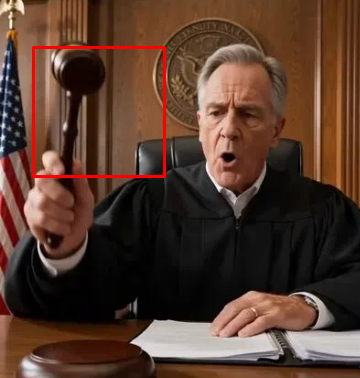
    The courtroom was used to fear, not surprises. Morning light spilled through the tall windows onto polished wooden benches while lawyers shuffled papers and spectators whispered behind their hands. Judge Daniel Carter sat high above them all, confident as always, a man who believed nothing could shake him. Then the gavel slammed. “Order!” he barked. But before the room could settle, small footsteps echoed down the aisle. Every head turned. A little girl in a pink outfit with uneven braids was walking alone toward the center of the courtroom, holding a phone tightly in both hands. Murmurs spread instantly. The judge leaned back with a smirk. “And what are you doing?” he asked, amused. The girl stopped directly below the bench and looked up without fear. “I’m making a call.” Laughter rippled through the room.
    Even a few deputies smiled. Judge Carter chuckled and spread his hands. “In my courtroom?” She nodded. His grin widened. “Go ahead. Call anyone you want.” The girl calmly pressed the screen and lifted the phone onto speaker. Ringing filled the courtroom, strangely loud in the silence that followed. The judge was still smiling… until the call connected. A man’s voice came through the speaker, sharp and immediate. “Daniel? Why is our daughter in court?” The smile vanished from the judge’s face as if it had been torn away. Gasps burst across the room. The bailiff turned slowly toward the bench. Judge Carter rose halfway from his chair, stunned. “What did you say?!” he shouted. The little girl never looked away from him. “You said call anyone.”

    No one moved. Then the voice on the phone spoke again, colder this time. “Tell her the truth. Today.” The judge’s expression collapsed in front of everyone watching. Continue in the comments 👇
  • Marie Osmond, who had a ‘different relationship to her brother’, reveals his last words to her before dying

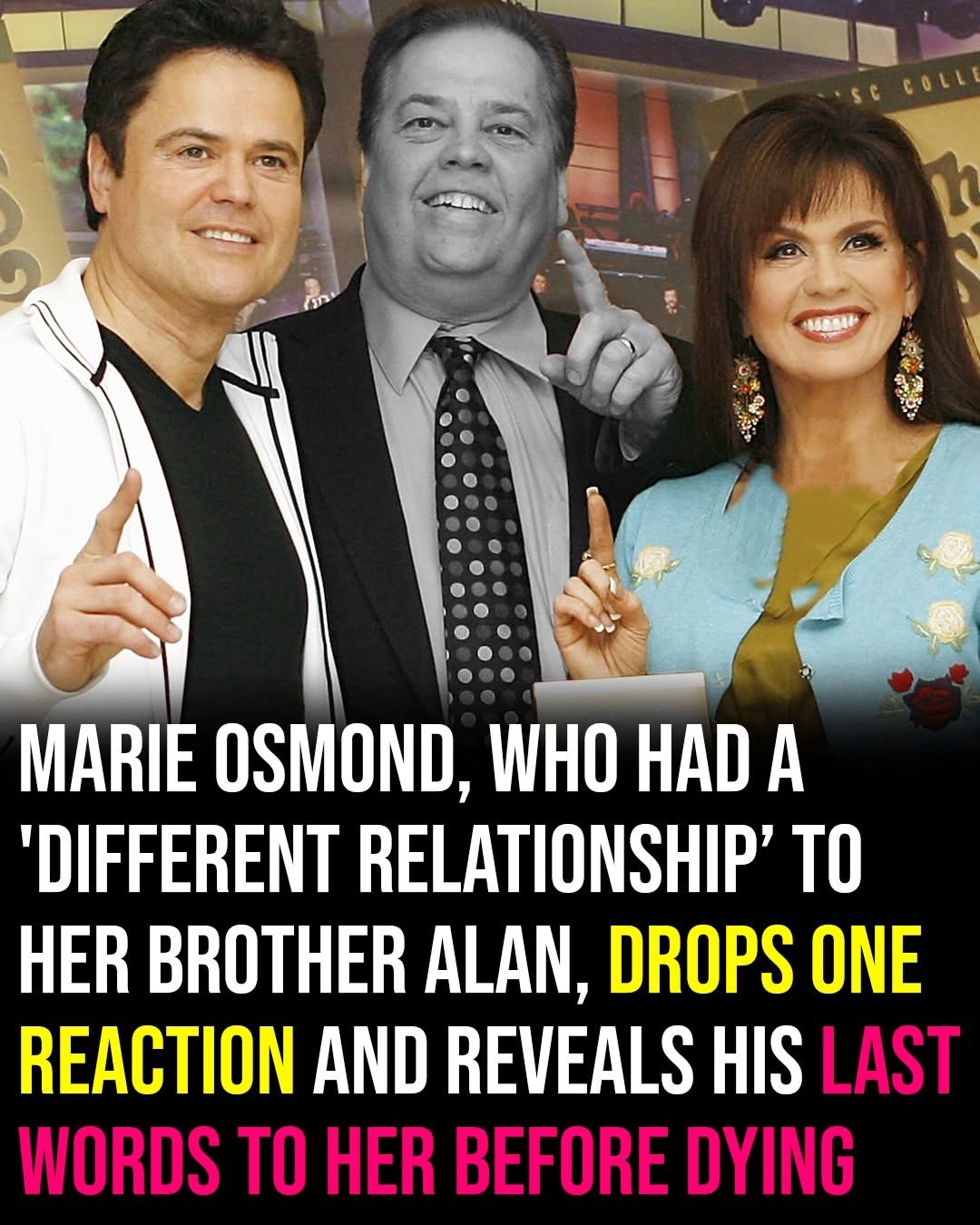
    Marie Osmond, who had a ‘different relationship to her brother’, reveals his last words to her before dying

    There’s something quietly powerful in the way the Osmond family has been speaking about this loss—because the words carry more than grief. They carry the weight of someone who was never just part of the story, but the one helping hold it together.
    Alan Osmond, the eldest brother and a founding force behind The Osmonds, passed away on April 20 at the age of 76, leaving behind not only a legacy in music but a family that clearly leaned on him in ways the public rarely saw.

    He is survived by his wife of more than five decades, Suzanne, their eight sons, and an extended family that now includes 30 grandchildren and five great-grandchildren—a reflection of a life rooted as much in family as it was in fame. Long before the spotlight found the Osmonds, Alan was shaping the path forward. As the oldest sibling, he helped guide the group’s direction, both creatively and personally. He co-wrote major hits like “One Bad Apple” and “Crazy Horses,” songs that helped define the group’s sound and cement their place in pop culture.

    But behind the success, there was always something quieter about him.

    When he was diagnosed with multiple sclerosis decades ago, he gradually stepped away from performing. Yet those close to him suggest he never stepped away from responsibility. If anything, his role simply shifted—from being on stage to being the steady presence behind it.

    His own words reflected that resilience: he acknowledged the illness, but refused to let it define him.

    That sense of quiet strength comes through most clearly in the tributes shared by his siblings.

    Donny Osmond spoke with deep gratitude, describing Alan as someone who carried more than his share of the burden so others could succeed. It wasn’t framed as sacrifice in a dramatic sense, but as something constant and dependable—the kind of support that shapes a family over time.

  • BREAKING – At least 4 dead?

    BREAKING – At least 4 dead?

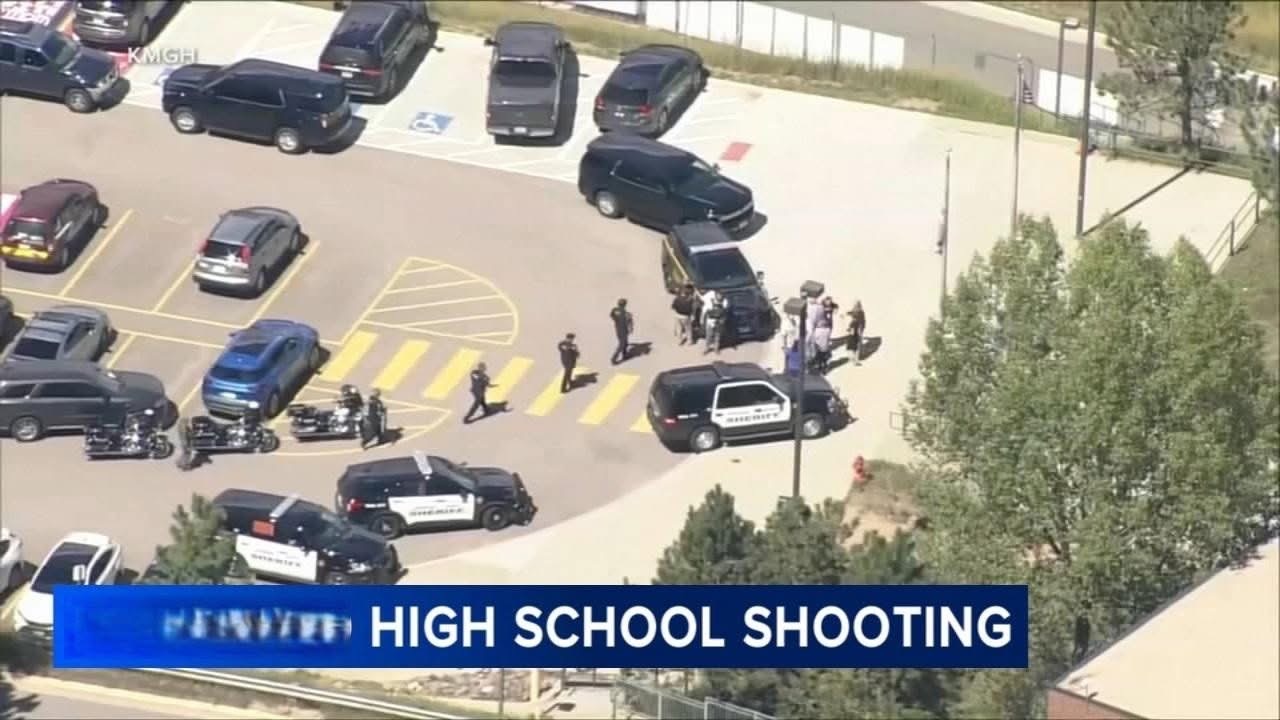
    The screams began where the singing should have been. In seconds, a child’s birthday in Stockton turned from frosting and balloons to bodies on the lawn and parents using their own flesh as shields. Four people dead. Ten wounded. A neighborhood’s illusion of safety blown apart. As investigators sift through shell casings and shattered plastic toys, the question everyone is terrified to ask is the one that matters most: if even a backyard birthday isn’t safe, what place in America truly is? Neighbors now walk past drying bloodstains and burned-out candles, wondering whether this was a freak eruption of evil or a sign that something in our national soul has finally, irrevocably.
    In the days after the Stockton shooting, the birthday yard became a shrine to all that was lost. Balloons deflated beside wilting flowers, their fading colors a quiet echo of the lives cut short. Families arrived in silence, touching the police tape as if it were a gravestone, whispering apologies to the children who saw too much, too soon.
    Yet amid the grief, a fragile resolve has begun to form. Counselors now sit cross-legged on living room floors, helping children draw what they cannot yet say. Neighbors who once exchanged only small talk now share casseroles, rides, and nightmares. City leaders promise reforms—better intervention, deeper community support, a harder look at how easily violence finds its way into ordinary lives. Stockton cannot reclaim that ruined afternoon, but it can insist that those four names become a turning point, not just another headline swallowed by the next tragedy.

  • They Were Never Meant to Be Seen Like This… 😳📸

    In a shocking twist of history, a viral video is bringing back to life the first U.S. presidents who were actually captured on camera. Before photography existed, powerful leaders like George Washington and Thomas Jefferson were known only through paintings—carefully crafted, often idealized.

    But everything changed in the 19th century.

    For the first time ever, reality replaced imagination.

    John Quincy Adams became one of the earliest presidents to be photographed, marking a historic moment when leaders could no longer hide behind artistic interpretation. From that point on, every detail—every wrinkle, every expression—was captured exactly as it was.

    These rare images don’t just show faces…
    They reveal the real people behind the power.

    Now, centuries later, these photographs are resurfacing online—leaving viewers stunned and questioning everything they thought they knew about history.

    Because sometimes… the past looks more real than we ever imagined.

  • Alleged “Ghost Ship” Sighting Sparks Debate Online

    A video circulating on social media has captured widespread attention after claiming to show a “real ghost ship” emerging through a stormy, fog-covered sea. The footage, shared on a popular Reels page, features a mysterious old-style sailing vessel appearing in the background while a narrator reacts in disbelief.

    The clip quickly gained traction, with viewers expressing both curiosity and skepticism. Some users described the scene as chilling and unexplained, while others argued that the video is likely edited using visual effects or green screen technology.

    Experts note that while so-called “ghost ships” do exist in a historical sense—referring to abandoned vessels found drifting without crew—there is no scientific evidence supporting paranormal interpretations.

    As the video continues to spread, it serves as another example of how dramatic storytelling and digital editing can blur the line between fact and fiction online.

  • Everyone Thought She’d Lost Her Mind Hammering Sharp Stakes Into Her Roof All Summer, Whispering About Madness and Fear

    Everyone Thought She’d Lost Her Mind Hammering Sharp Stakes Into Her Roof All Summer, Whispering About Madness and Fear

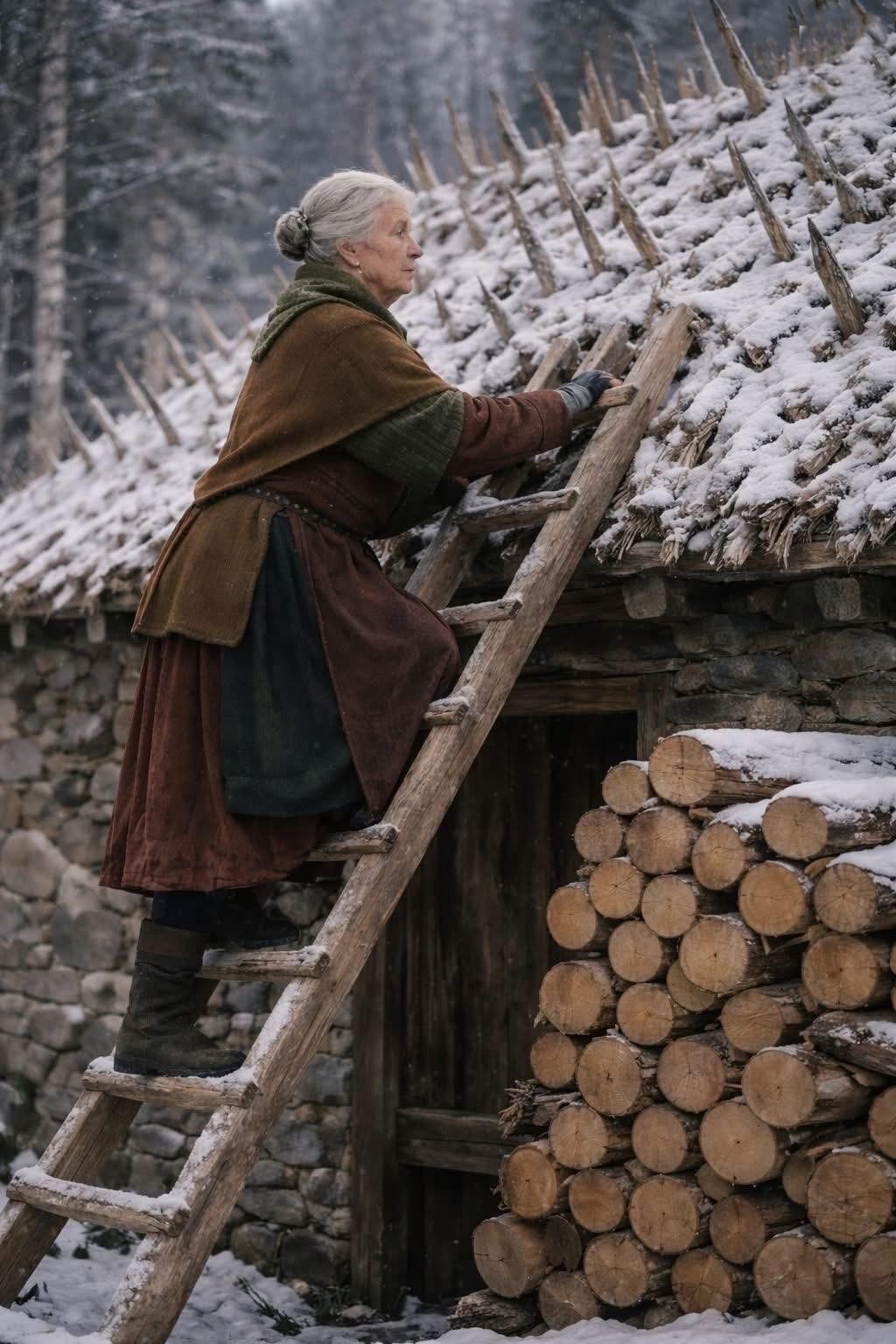
    All summer long, while the sun blazed over the small village and children ran barefoot through dusty streets, an elderly woman climbed onto the roof of her modest house every morning with a small hammer, a bundle of sharpened wooden stakes, and quiet determination. She moved slowly, carefully, her joints stiff with age, yet her movements were steady and precise. Neighbors would pause in their routines to watch her from behind curtains or across garden fences, puzzled by the strange sight.

    Day after day, she hammered the pointed stakes into the shingles, lining them in careful rows, spacing them evenly, as if following an invisible blueprint only she could see. By late summer, her roof no longer looked like a roof at all. It resembled something out of a medieval fortress, bristling with sharp spines that glinted faintly in the sunlight. People whispered that grief had finally overtaken her. Since her husband’s death the year before, she had withdrawn into herself, rarely attending community gatherings or chatting in front of the bakery. Now, this unsettling construction seemed like proof that loneliness had turned into madness. Some felt uneasy passing her house. Others felt pity. A few felt fear. Yet none truly understood what they were witnessing.

    Her story spread beyond the village, shared as a lesson about patience and perspective. And for those who truly listened, it carried a deeper message: grief does not always break people. Sometimes, it sharpens their awareness. Sometimes, it teaches them to build quietly against storms others refuse to believe are coming.

  • A Young Soldier Came Home on Leave — And the Old Dog Collapsed Into His Chest Like They’d Never Been Apart

    A Young Soldier Came Home on Leave — And the Old Dog Collapsed Into His Chest Like They’d Never Been Apart

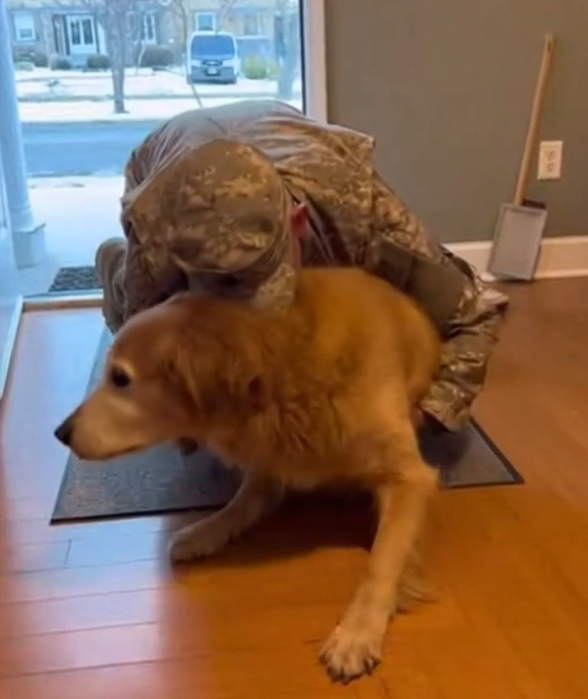
    The dog lost his balance, let out a soft broken sound, and collapsed forward—burying his gray-muzzled head into the soldier’s chest, as if the world had finally given him permission to stop holding on.
    For a split second, no one moved.

    The front door stood half open, winter light spilling across the worn wooden floor. A suitcase rested upright by the wall. A jacket still dripped melted snow onto the mat.

    The young man froze.

    Early twenties.
    White.
    Military haircut still sharp at the edges.
    Uniform creased, boots dusty from travel.
    The faint smell of cold air and airport coffee clung to him.

    His arms hovered in the air, unsure where to land.

    The dog sagged fully now.

    Thirteen years old.
    Once broad-chested, now thin through the hips.
    Hind legs shaking, barely holding.
    Clouded eyes blinking too fast.
    His breathing came in shallow bursts as his weight pressed into the soldier like a confession.

    A woman gasped from the kitchen.

    Someone whispered, “Oh my God…”

    The dog didn’t bark.
    Didn’t whine.
    Didn’t even lift his head.

    He just leaned.

    The soldier’s hand finally came down, gripping fur that felt too fragile, too light.

    “Buddy…?” he said, voice breaking on the name.

    And that was when everyone realized this wasn’t just a homecoming.

    It was a release.

  • Experts Reveal How Ancient Wonders May Have Truly Looked

    A growing number of historians and archaeologists are using modern technology to recreate the appearance of the ancient wonders of the world. From the towering Hanging Gardens of Babylon to the majestic Colossus of Rhodes, experts are combining historical records, architectural studies, and digital modeling to bring these lost marvels back to life.

    These reconstructions aim to provide a more accurate vision of how these iconic structures once stood, offering new insights into ancient civilizations and their engineering achievements. The project has captured widespread public interest, especially on social media platforms, where educational content continues to gain popularity.

    Researchers say that while some details remain uncertain, these visualizations help bridge the gap between history and imagination, allowing people to experience the ancient world like never before.

  • WH Unveils New Move as Iran Threatens to Close Strait of Hormuz

    WH Unveils New Move as Iran Threatens to Close Strait of Hormuz

    The announcement hit like a bomb. Iran’s new Supreme Leader has slammed the Strait of Hormuz shut “until the war is over,” choking a vital artery of the world’s oil and daring the United States to answer. Missiles streak over Israel. Hezbollah boasts of “Eaten Straw.” Trump warns of sleeper cells, drone swarms, and Biden’s “stupid open Oil tankers idle at the mouth of the Gulf while a single sentence from Tehran threatens to rattle every gas pump on earth.
    Mojtaba Khamenei’s order to close the Strait of Hormuz and demand the evacuation of U.S. forces from Gulf bases is more than bluster; it is a calculated attempt to weaponize energy, fear, and uncertainty. Washington scrambles for a Jones Act waiver to blunt the shock, hoping alternative routes and domestic shipping can keep American ports supplied as markets brace for impact.

    Across the region, the sky is already on fire. Hezbollah and Iran coordinate a massive missile and drone barrage on Israel, inviting ferocious counterstrikes that risk turning Lebanon into “a second Gaza.” Trump, praising the ferocity of Operation Epic Fury, warns of Iranian-linked sleeper cells and drone plots on U.S. soil, tying them to Biden’s border policies. The war may be “over there” on the map—but its consequences are already closing in on every household light switch and every gallon of fue

  • Diver Claims Discovery as “Proof of Biblical Flood”

    A viral video circulating on social media shows a diver exploring what appears to be an underwater site filled with fish and submerged objects. Overlaid text in the footage reads “Proof of the Biblical Flood,” suggesting the scene may be evidence supporting the ancient story of a العظيم flood described in religious texts.

    In the video, a man speaks directly to the camera while footage of the diver plays behind him, pointing to the underwater environment as a possible sign of a historic catastrophic event. However, experts remain skeptical, noting that such underwater scenes can often be explained by natural geological changes, rising sea levels, or previously submerged structures.

    The clip has quickly gained attention online, with viewers divided between those who see it as compelling evidence and others who question its authenticity and scientific basis.