Author: admin

  • How Marrying An Older Wealthy Man Exposed His Entire Greedy Family

    How Marrying An Older Wealthy Man Exposed His Entire Greedy Family

    grew up in poverty, learning to stay unnoticed just to get by, until I met my wealthy and kind friend Violet. During some of my hardest years, she became a source of stability when even my own relatives had turned away from me. Everything changed when I met her grandfather, Rick, a man who quickly understood the reality of my situation. He offered me a marriage—not out of romance, but as a way to give me financial security. I accepted, choosing survival over pride. Violet saw it as a betrayal and ended our friendship, convinced I had acted out of greed.

    After the quiet wedding, I expected a tense life in his estate, but Rick soon revealed the truth. He was seriously ill, with only months left to live, and needed someone he could trust. His children were already trying to take control of his wealth—his son David had attempted to declare him incompetent, while his daughter Angela was quietly draining accounts and dismissing loyal staff. Rick didn’t choose me for convenience; he chose me because he believed I would protect what he had built.

    The estate quickly became a place of conflict. Angela and David treated me with open hostility, seeing me as an obstacle to their inheritance. Their insults didn’t break me—I understood they were driven by fear of losing control. When Rick suffered a medical emergency, their indifference made everything clear. While I rushed to help him, they focused only on their own inconvenience.
    In his final days, Rick gathered his family and made his intentions clear. He confirmed that I would remain his wife and take charge of his estate and foundation. He exposed the actions of his children, forcing the truth into the open. Violet witnessed everything, realizing the situation was far more complex than she had believed.
    After Rick passed away four months later, his decisions stood. David lost his position, Angela lost her influence, and I was left in charge of the legacy he trusted me to protect. Violet later apologized, but our friendship was never the same.

    For the first time in my life, I had security—but more importantly, I had earned trust and responsibility. What began as a decision for survival became the moment that defined my future.

  • The risk of foam in your urine.

    The risk of foam in your urine.

    What foam in urine can indicate, and when should you consult a healthcare professional?
    Many people have noticed foam in their urine at some point and dismissed it without much concern. It’s often thought to be normal, a result of urinating forcefully, dehydration, or simply “something that always happens.” However, when this foam is abundant, persistent, and appears repeatedly, it may be sending a silent warning about your kidney health.

    Excessive foam in urine is not a minor issue. In medicine, it’s often the visible manifestation of a problem that isn’t immediately apparent: protein loss through the kidneys.
    Proteins have a special characteristic: they bind water and generate foam, similar to what happens with soap or egg white. Normally, the kidneys function as an extremely fine filter that eliminates toxins and excess fluids while retaining valuable substances like proteins.

    When this filter is damaged, proteins begin to leak into the urine. When you urinate, these proteins produce a denser, more persistent foam that doesn’t disappear quickly. It’s important to clarify that a small amount of occasional foam can be normal. The warning sign appears when the foam is:

    Abundant

    Repetitive

    Persistent

    Difficult to dissipate

    It’s not an isolated incident, but a recurring pattern. Persistent foam in the urine can be an early warning sign of kidney damage that is still reversible. Listening to these signals early allows you to protect a vital organ before the problem becomes irreversible. Ignoring it, on the other hand, can mean discovering the damage when it’s too late. Taking care of your kidneys today is investing in your quality of life for the future.

  • Darrell Sheets’ ‘Storage Wars’ Co-Star Reveals What Happened Before Tragedy

    Darrell Sheets’ ‘Storage Wars’ Co-Star Reveals What Happened Before Tragedy

    For years, viewers knew Darrell Sheets as the swaggering risk-taker of Storage Wars—the bidder who walked into auctions like he expected to win and often did. On screen, he was loud, fearless, and larger than life, the kind of reality TV presence built for memorable lines and big reveals. But the story that has emerged after his death is far more painful and far more human. Darrell Sheets, 67, was found dead at his home in Lake Havasu City, Arizona, on April 22. Police have said he appeared to have died from a self-inflicted gunshot wound, and the investigation remains active. Authorities have also said they are aware of allegations of cyberbullying and are looking into them as part of that .

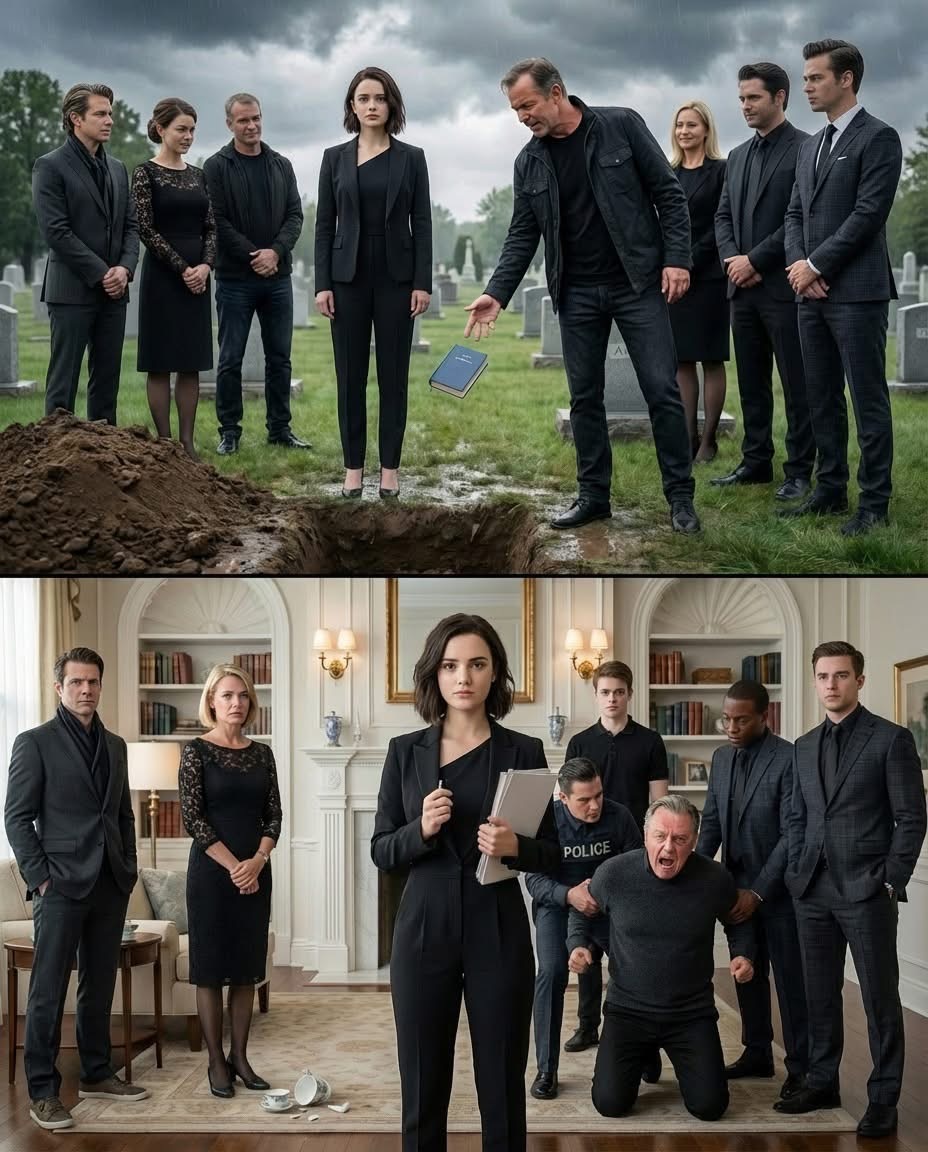
  • AT THE FUNERAL, MY GRANDMA LEFT ME HER SAVINGS BOOK. MY FATHER THREW IT ONTO THE GRAVE: ‘IT’S USELESS. LET IT STAY BURIED.’

    AT THE FUNERAL, MY GRANDMA LEFT ME HER SAVINGS BOOK. MY FATHER THREW IT ONTO THE GRAVE: ‘IT’S USELESS. LET IT STAY BURIED.’

    This story works because it taps into something deeply human: the quiet underestimation of strength—and the moment that strength finally answers back.

    At its core, Elise’s journey isn’t really about money. The $2.8 million is almost symbolic. What matters more is agency—the shift from being dismissed as “the girl who was raised by Grandma” to becoming the one person who actually listened, learned, and acted.

    The figure of the grandmother, Margaret Hale, is particularly well drawn. She isn’t just a victim of elder abuse; she’s strategic. She anticipates betrayal, documents it, and leaves behind not just assets but a plan. That handwritten note—“When they laugh, let them. Then go to the bank.”—is the emotional and structural hinge of the entire narrative. It transforms grief into direction.
    Then there’s the father, Victor Hale. He represents a very specific kind of arrogance: the belief that control equals ownership. He doesn’t just want the money—he assumes it’s already his. That’s why the graveyard scene is so effective. Throwing the savings book into the coffin isn’t just cruelty; it’s certainty. He believes the story is already over.

    But it isn’t.

    Elise’s response is what elevates the story beyond simple revenge. She doesn’t argue. She doesn’t defend herself. She acts. Quietly walking to the bank becomes more powerful than any confrontation at the funeral could have been. That restraint gives the later unraveling real weight.
    The bank scene introduces a tonal shift—from emotional drama to controlled revelation. Diana Cross and the clerk act almost like witnesses to a truth finally surfacing. The detail that Victor tried to access the account that very morning adds urgency and confirms what the reader already suspects: this wasn’t neglect, it was ongoing exploitation.

    By the time the final confrontation happens in the house, the power dynamic has completely inverted. Victor still speaks like he’s in charge—but the system has already moved against him. The entrance of the detectives isn’t just a plot device; it’s a symbolic correction. Authority returns to where it should have been all along.

    One of the most satisfying elements is that Elise doesn’t just win—she redirects the outcome. Turning the house into the Rose Hale Center reframes the entire narrative. What began as personal injustice becomes something communal. It suggests that survival isn’t the endpoint—purpose is.
    There’s also a subtle but important commentary on perception. Throughout the story, Elise is dismissed as emotional, dramatic, weak. Those assumptions allow Victor to operate unchecked for years. In the end, it’s precisely those assumptions that blind him. He never considers that she might follow through on her grandmother’s advice.

    And that final image—the savings book displayed in glass—is quietly powerful. Not as a trophy, but as a reminder. Not of wealth, but of what people overlook when they underestimate someone who’s been quietly paying attention.

    If anything, the story leaves you with a simple, unsettling idea:

    People rarely lose everything in one moment.
    They lose it the moment they assume no one is watching.

  • AT 45 I GOT PREGNANT FOR THE FIRST TIME. AT MY ULTRASOUND, THE DOCTOR WENT PALE. SHE PULLED ME ASIDE AND SAID: ‘YOU NEED TO LEAVE NOW. GET A DIVORCE!’

    AT 45 I GOT PREGNANT FOR THE FIRST TIME. AT MY ULTRASOUND, THE DOCTOR WENT PALE. SHE PULLED ME ASIDE AND SAID: ‘YOU NEED TO LEAVE NOW. GET A DIVORCE!’

    The doctor’s face lost all color so quickly that, for a second, I thought she might faint before I did. Instead, she stood up, locked the ultrasound room door, and spoke in a voice so low it barely felt real.

    “Mara, you need to leave. Now. And you need to get a divorce.”

    I let out a sharp, disbelieving laugh. “Why?”
    Dr. Elena Voss didn’t answer right away. She turned the monitor toward me, tapped the screen with trembling fingers, and said, “No time. You’ll understand when you see this.”

    At forty-five, I had grown used to labels—infertile, barren, too late. They had started as whispers and eventually turned into jokes, even slipping into my husband’s family group chats. Victor would always smooth it over afterward with flowers and carefully chosen silence, while his mother, Claudine, spoke to me like I was something fragile and pitiful.
    But that morning, everything changed.

    For the first time in my life, I heard my baby’s heartbeat.

    It should have been the moment I remembered forever.

    Instead, it became the moment everything unraveled.

    Because beside the ultrasound screen, on an open file, I saw a name that wasn’t mine.

    “Patient: Lila Harrow.”

    My assistant.
    The date was from two weeks earlier. The notes were brief but devastating.

    Six weeks pregnant. Genetic screening requested. Paternity confirmation pending: Victor Lang.

    The room tilted.

    Lila—young, bright, loyal Lila—had been sitting across from me every day, bringing me tea, praising my work, calling me inspiring.

    And she was pregnant with my husband’s child.

    My hand drifted to my stomach.

    Elena swallowed hard. “She used your insurance card. Claimed she was your surrogate.”

    “My surrogate?” I whispered.

    Elena clicked again. A consent form appeared.

    My signature was at the bottom.

    Perfect.

    Elegant.

    Forged.

    “They’re building a medical narrative,” she said quietly. “Confusion, consent, custody—if you weren’t pregnant, they might have gotten away with it. But now… this complicates everything.”

    I stared at the signature.

    That morning, Victor had kissed me and said, almost gently, “Don’t get your hopes up, sweetheart. At your age, miracles usually come with fine print.”

    Now I understood exactly what he meant.

    I folded the document, slipped it into my purse, and stood.
    Are you safe going home?” Elena asked.

    “No,” I said. “But they don’t know that.”

    Because Victor believed I was harmless.

    He believed I was soft.

    Dependent.

    Forgettable.

    He had forgotten that I built everything he stood on.

    And more importantly, he had forgotten that I knew how to fight.

    When I got home, Victor was waiting in the kitchen with champagne chilling in a silver bucket.

    Claudine sat nearby, polished and composed.

    And Lila stood by the window, her hand resting lightly over her stomach.

    The sight would have broken me once.

    Now, it sharpened something inside me.

    Victor smiled. “Well?”

    I set my purse down calmly. “I’m pregnant.”

    For a split second, every mask dropped.

    Lila’s lips parted. Claudine froze mid-sip. Victor’s smile cracked.

    Then it returned.

    “At forty-five?” he said softly. “Mara, are you sure?”

    Claudine sighed. “Doctors can be mistaken.”

    Lila added gently, “I hope everything is… healthy.”

    There was no joy in the room.

    Only calculation.

    That night, Victor moved into the guest room.

    By morning, the narrative began.

    I was tired. Emotional. Overwhelmed.

    He suggested I step back from the company. Claudine whispered to board members about instability. Lila hovered closer in meetings, taking notes like she already belonged.

    They thought they were moving pieces quietly.

    They didn’t realize I was watching every move.

    For ten days, I let them believe their plan was working.

    I cried where cameras couldn’t see.

    I stayed quiet in meetings.

    I let Victor speak over me.

    Meanwhile, my attorney gathered records.

    My investigator followed Lila.

    My cybersecurity team retrieved deleted messages.

    And piece by piece, the truth came together.

    They weren’t just replacing me.

    They were planning to erase me.

    One email said it plainly:

    Once Mara is declared unfit, we file for conservatorship. Lila’s child becomes the heir. We control everything.

    Not divorce.

    Control.

    Containment.

    A cage built from lies.

    The final piece came in a video.

    Victor and Lila at a private bank vault. Claudine handing over forged documents. Lila laughing.

    “By Christmas,” she said, “Mara will be gone.”

    That was the moment I stopped waiting.

    The board meeting was scheduled within hours.

    Victor arrived confident.

    Lila played fragile.

    Claudine looked certain.

    They all expected me to falter.

    Instead, I took my seat at the head of the table.

    “My condition,” I said calmly, “has made me very focused.”

    Then the screen lit up.

    Records.

    Messages.

    Forgery.

    Footage.

    One by one, the truth unfolded.

    Victor’s confidence cracked.

    Claudine whispered in panic.

    Lila tried to speak.

    “Sit down,” I told her.

  • Body Language Expert Questions JD Vance’s Evacuation During White House Shooting Incident

    Body Language Expert Questions JD Vance’s Evacuation During White House Shooting Incident

    This kind of situation tends to look more dramatic—and more suspicious—than it actually is once you understand how protection protocols work.

    First, the basics: both Donald Trump and JD Vance are under constant protection by the United States Secret Service. But they are not handled identically in every moment.

    What people are reacting to—one being moved quickly while the other appears to stay seated briefly—usually comes down to three factors:
    1. Position relative to the threat
    Security decisions are made in seconds based on where the danger is coming from. If one protectee is closer to a perceived threat vector (entrance, corridor, line of fire), they may be extracted immediately, while another is momentarily held in a “secure-in-place” position behind shielding.

    2. Layered evacuation priorities
    It’s not always “everyone runs at once.” The Secret Service uses layered movement:

    One protectee is moved
    Others are covered, secured, then moved
    This avoids chaos and reduces risk of cross-exposure.
    3. Agent control vs. individual reaction
    Even if a leader says they “chose” to wait, in reality agents are controlling the situation. Sometimes what looks like hesitation is actually:

    agents assessing the threat
    securing a path
    positioning protective barriers
    So Trump remaining seated briefly doesn’t necessarily mean delay or error—it can mean he was already in a controlled protective posture.

    About the “body language analysis”

    Commentary from analysts like John Paul Garrison can be interesting, but it has limits.

    Body language in a real security incident is not a reliable indicator of:
    confidence
    awareness
    decision-making
    Because the person’s movement is heavily dictated by trained agents, not instinct.

    What actually matters here

    From a security standpoint, the key outcome is simple:

    Threat identified
    Response within seconds
    Suspect stopped
    No casualties among attendees

  • Scientists Tracked an Eagle for 20 Years—What They Learned

    Scientists Tracked an Eagle for 20 Years—What They Learned

    For two decades, a single eagle carried a silent witness on its back—a GPS tracker that transformed the bird from a biological subject into a source of profound scientific bewilderment. While its peers followed the ancient, rhythmic pulse of seasonal migration, this eagle carved a chaotic, jagged path across continents, defying every rule in the avian playbook. As researchers watched the data points accumulate, the bird’s movements began to look less like survival and more like a deliberate, cryptic message…
    that refused to be decoded. The eagle didn’t just fly; it doubled back over scorched deserts, lingered in desolate mountain passes for no apparent reason, and veered into oceanic stretches that should have been death sentences. For years, the team of scientists sat in their labs, staring at maps that looked like the frantic scribbles of a madman. They questioned everything: Was the bird sick? Was the technology failing? Or were they witnessing a fundamental flaw in their understanding of the natural world?

    The pressure to find an answer mounted as the years turned into a decade. Every time the bird veered off-course, it challenged the core tenets of ornithology. The scientific community began to whisper about the “erratic eagle,” a creature that seemed to exist in a state of perpetual, aimless wandering. Yet, the bird survived. It thrived in places where it should have perished, and it navigated with a precision that suggested it wasn’t lost at all—it was simply playing a game the humans hadn’t yet learned the rules to.

    The breakthrough didn’t come from a new piece of technology, but from a shift in perspective. Researchers stopped looking at the eagle as an isolated entity and started looking at the world through its eyes. By layering the bird’s flight paths over hyper-local weather data, wind currents, and subtle topographical shifts, the chaos finally began to bleed into clarity. They realized the eagle wasn’t wandering; it was dancing with the invisible architecture of the planet.

  • My 16-Year-Old Son Went Missing – A Week Later, His Teacher Called and Said He Had Submitted a Paper Titled, ‘Mom, You Need to Know the Whole Truth’

    My 16-Year-Old Son Went Missing – A Week Later, His Teacher Called and Said He Had Submitted a Paper Titled, ‘Mom, You Need to Know the Whole Truth’

    The night Noah Delmore didn’t come home, something inside me refused to settle. While everyone else—especially Daniel—kept insisting it was just a teenager being careless, I felt the kind of certainty that doesn’t come from logic. It comes from knowing your child.

    Noah wasn’t reckless. He was precise. Thoughtful. The kind of boy who checked in, even when he didn’t have to.

    So when hours turned into days, and days into a week, the quiet dread became unbearable. The house felt wrong. His plate stayed untouched. His room remained exactly as he had left it, frozen in time, while my mind spiraled through every possibility.
    Daniel, on the other hand, stayed composed—too composed. He used words like overreacting, emotional, unstable. Words that made him sound calm and me sound irrational. At first, I thought it was denial. Later, I realized it was something else entirely.

    Then came the call.

    It was late—too late for anything ordinary. Mrs. Delmore, Noah’s English teacher, sounded shaken. She had found an assignment in her grading pile—one Noah had supposedly submitted, despite not being in class.
    The title alone made my chest tighten:

    “Mom, I Want You to Know the Whole Truth.”

    But it was the first line that changed everything.
    But it was the first line that changed everything.

    “Please don’t tell Dad until you’ve finished reading.”

    That was the moment the ground shifted beneath me.

    The words that followed weren’t the ramblings of a runaway teenager. They were careful. Measured. Protective. My son wasn’t hiding from me—he was trying to protect me.
    He had discovered something in Daniel’s office. Bank documents. Accounts that didn’t add up. My mother’s inheritance—money meant for our home, for Noah’s future—was gone.

  • Trump Could Step In as White House Reshuffles Press Briefings During Karoline Leavitt’s Maternity Leave

    Trump Could Step In as White House Reshuffles Press Briefings During Karoline Leavitt’s Maternity Leave

    A temporary shift is taking shape inside the White House press operation as Press Secretary Karoline Leavitt prepares to step away from the briefing room and begin maternity leave.
    Leavitt, who has become one of the most visible faces of the administration, signaled during a recent press appearance that her time behind the podium was about to pause. Speaking to reporters, she said..
    it would “likely” be her last gaggle for some time, joking that she was “about ready to have a baby any minute.”
    The moment was personal, but the decision now carries official consequences. With Leavitt preparing to welcome her second child, the White House is adjusting how it will communicate with the press during her absence.
    And the plan may not look like a traditional handoff.