Pam Bondi vanished from Trump’s inner circle. Then the truth spilled out.
First, she was quietly fired.
Then, weeks later, doctors found cancer in her neck
Pam Bondi’s abrupt exit from Donald Trump’s administration was framed as a smooth “transition,” but it masked a much harsher reality: she’d been fired, and within weeks, she was facing a life-altering diagnosis. Thyroid cancer forced her from the political battlefield into the world of scans, surgeries, and uncertainty, even as Trump publicly praised her record on crime and loyalty. Allies now say she quietly “kicked cancer’s ass,” enduring treatment while Washington speculated about her future and her relationship with the former president.
With her prognosis described as excellent and recovery underway, Bondi is expected to return in a new role on the Presidential Council of Advisors on Science and Technology. For a woman once at the center of Trump’s justice agenda, the comeback is striking: pushed out of power, blindsided by cancer, and now stepping back into a high-profile arena, carrying both political scars and the mark of a survivor.
Blog
-
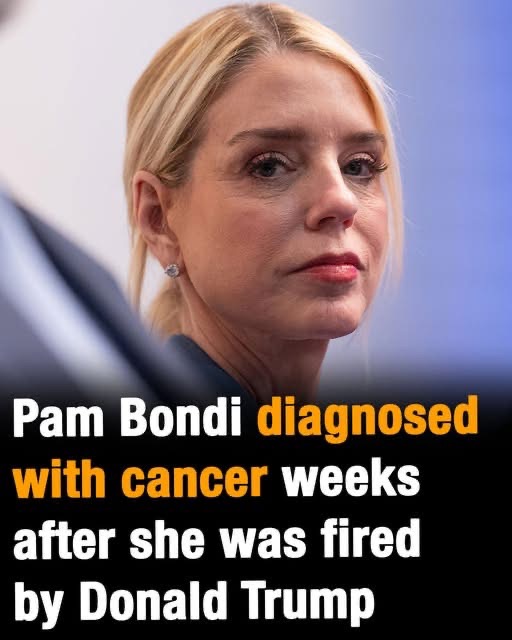
Former AG Pam Bondi diagnosed with cancer weeks after being fired by Trump: report
-

Donald Trump sparks concerns after sharing chilling post stating ‘the end is near’
a deliberate, calculated signal regarding the state of the world. As the song plays, the words “I face the final curtain” resonate with a weight that transcends mere musical nostalgia. For many observers, the timing was far from coincidental. With the U.S. embroiled in high-stakes tensions with Iran over the critical shipping lanes of the Strait of Hormuz, the atmosphere is already thick with the threat of escalation. The juxtaposition of a legendary ballad about finality against the backdrop of potential military conflict created an eerie, unsettling narrative that the internet was quick to dissect.The speculation took many forms. Some users interpreted the post as a dark foreshadowing of the President’s own future, while others viewed it through a more strategic lens. Could this be a signal of his intent to handle the Iranian crisis on his own terms, unburdened by diplomatic tradition? Reports from the time suggested that the administration was playing a complex game of “madman theory,” intentionally projecting instability to force adversaries to the negotiating table. In this light, the video wasn’t a sign of weakness, but a performance of absolute, uncompromising resolve—a declaration that he would, indeed, do it his way.Yet, the ambiguity remains the most haunting element of the post. Officials have often noted that the President’s public messaging is frequently improvised, a reflection of his own internal processing rather than a rigid, pre-planned strategy. This unpredictability is a double-edged sword; it keeps rivals off-balance, but it also leaves the public grasping for meaning in the silence between his words. When he speaks of “thinning the blood” to protect his heart or shares a song about the final curtain, he invites a level of scrutiny that blurs the line between the man and the office.
Ultimately, the incident serves as a reminder of how fragile our shared reality has become. Whether the post was a cryptic warning, a moment of personal reflection, or a tactical feint, it successfully commanded the national attention. In an era where every click, share, and post is analyzed for hidden meaning, the “final curtain” may not be a literal end, but rather a reflection of the constant, high-pressure theater that defines modern leadership. As the world watches and waits, one thing remains clear: the performance continues, and the audience is left to decide for themselves what the music is truly trying to say. -
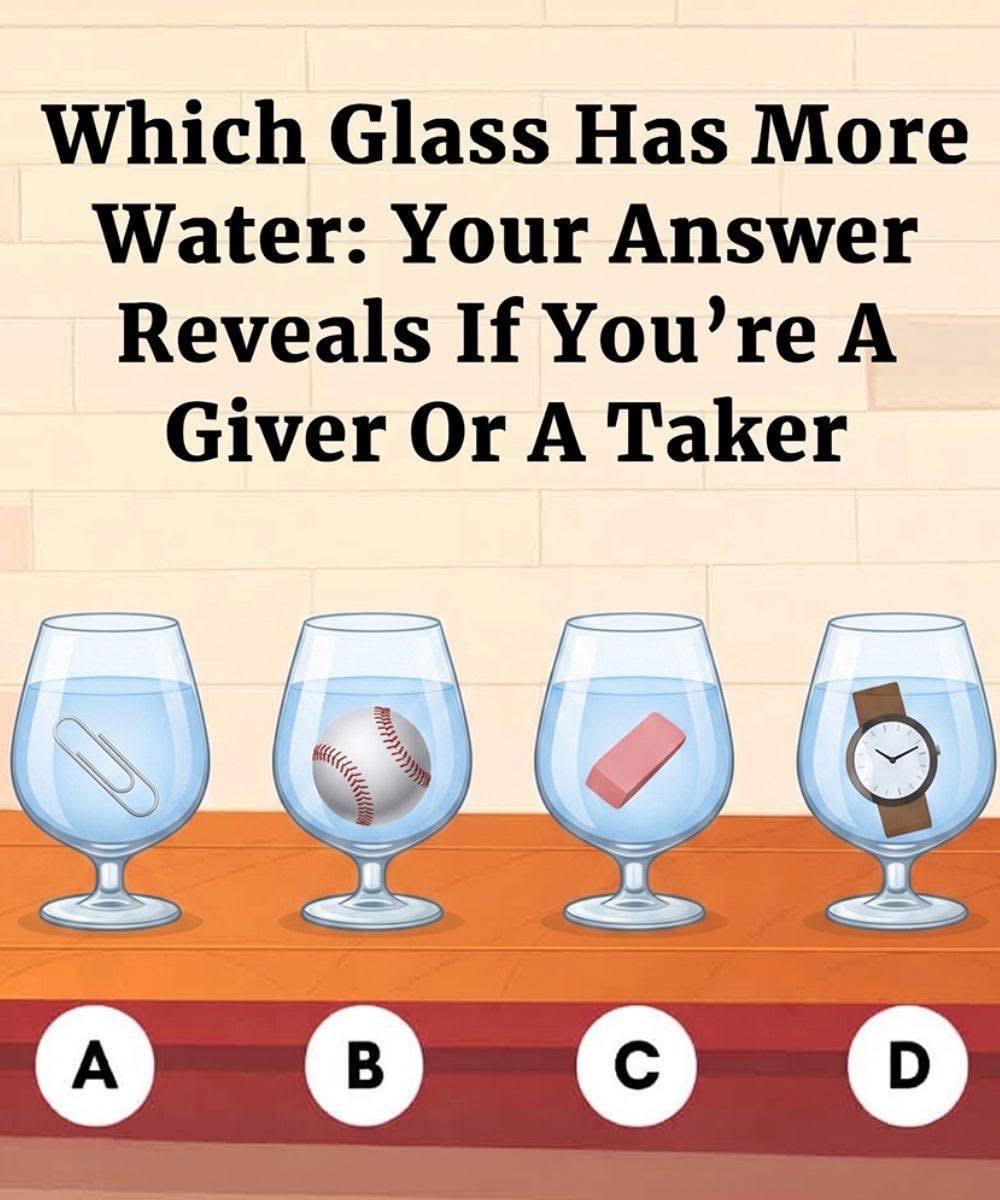
Which Glass Has More Water: Your Answer Reveals If You’re A Giver Or A Taker
At first glance, the puzzle looks incredibly simple.
Four glasses labeled A, B, C, and D appear to contain nearly identical amounts of water. But inside each glass sits a different object — and that tiny detail changes everything.
The challenge sounds easy:
Which glass actually contains the most water?
But as thousands of people discovered online, the answer depends on whether you focus on appearance… or physics.Glass A contains a paperclip.
Glass B holds a baseball.
Glass C contains an eraser.
Glass D has a wristwatch.Most people immediately judge the puzzle based on water level alone. Since all four glasses appear equally full, the brain instinctively assumes the amount of water must be roughly the same.
That’s where the trick comes in.The key to solving the puzzle is understanding displacement.
Every object placed inside the glass takes up space. The larger the object, the less room remains available for actual water.
-

My Sixteen Year Old Son Brought Home Newborn Twins That His Father Abandoned
Five years after my devastating divorce from my ex-husband Derek, I was struggling to rebuild a stable life with my sixteen year old son, Josh. Our quiet existence in a small apartment near the hospital was permanently altered one afternoon when Josh walked through the front door holding two newborn babies wrapped in blankets. Completely shocked, I demanded an explanation for why my teenage son had casually brought two infants into our home. Josh quietly explained that he had visited the hospital emergency room earlier that day and accidentally witnessed his father storming out of the maternity ward.
Josh discovered that Derek’s girlfriend, Sylvia, had just given birth to twins and Derek had callously abandoned them at the hospital. Josh felt an immediate bond with his new half siblings and refused to leave them alone with a mother who was desperately sick with severe medical complications. Despite my initial panic about our finances and Josh’s young age, we returned to the hospital to speak with Sylvia. She was terrified and incredibly weak, and Josh immediately promised that we would take care of her babies. I contacted Derek, who cowardly arrived with a lawyer to sign over all his parental rights before disappearing from our lives for good.
The first few weeks with baby Lila and Liam were exhausting, but I watched in awe as Josh stepped up to handle midnight feedings and endless diaper changes. Our fragile new family was tested when Lila developed a severe fever and was diagnosed with a dangerous congenital heart defect that required immediate surgery. Without hesitation, I drained the small savings account I had built for Josh’s future to pay for the expensive, six hour operation. The surgery was ultimately successful, and when the doctor delivered the good news, Josh finally broke down crying from the overwhelming stress he had been carrying.
Tragically, Sylvia passed away a few days later from her medical complications, leaving behind a note entrusting her children entirely to our care. A year has passed since that chaotic afternoon, and our once quiet apartment is now filled with the beautiful mess of raising two toddlers. Josh willingly sacrificed the carefree experiences of a normal teenager, like playing football and hanging out with friends, to become a devoted older brother. Looking back, I realize that the day I thought my life was completely falling apart was actually the day we became the exact family we were always meant to be. -
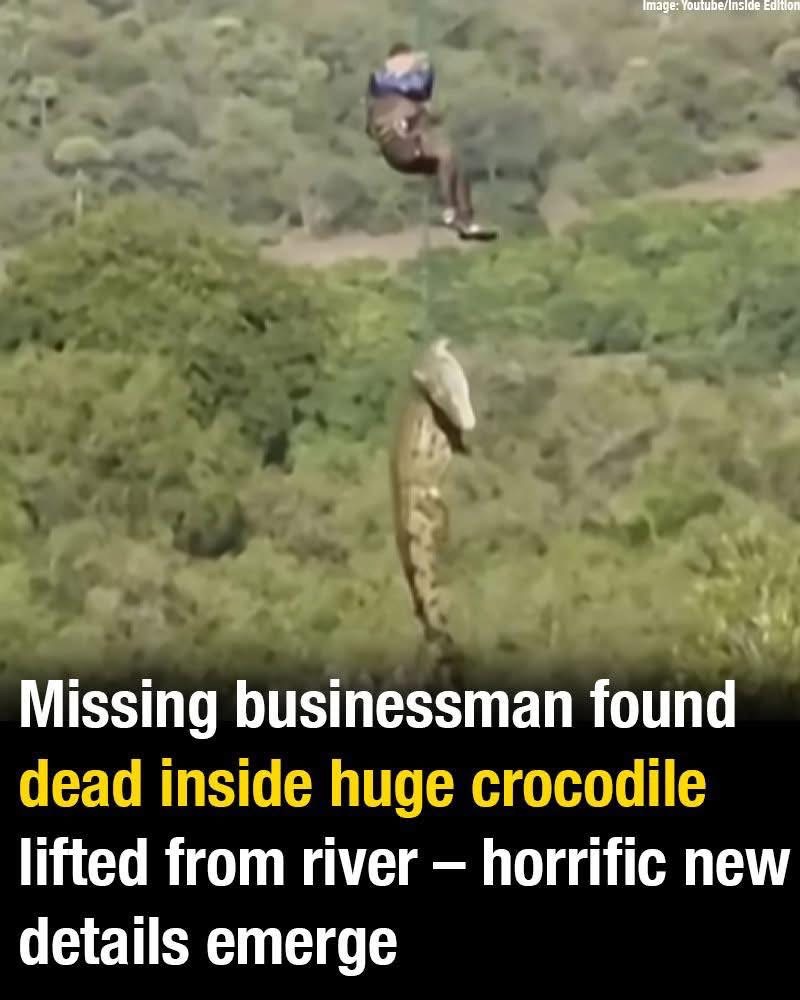
Missing businessman found dead inside huge crocodile lifted from river – horrific new details emerge
A tragic disappearance in northeastern South Africa has taken an even darker turn after authorities reportedly discovered human remains inside a massive Nile crocodile believed to be connected to the case of missing businessman Gabriel Batista.
The 59-year-old vanished last week while attempting to cross the Komati River, a dangerous waterway known for strong currents and wildlife. According to local authorities, Batista’s vehicle became trapped on a low bridge during the crossing.When police arrived at the scene, the car was abandoned.
There was no sign of Batista anywhere nearby.
The discovery immediately triggered a large-scale search operation involving police divers, drones, helicopters, and local rescue teams combing the river for answers.
Days passed without any trace of the businessman.
Then investigators noticed something unusual.
Search crews spotted an enormous Nile crocodile measuring nearly 15 feet long and weighing around 1,100 pounds. According to authorities, the reptile appeared strangely sluggish and had a visibly swollen stomach, raising immediate suspicions among the rescue team.
The crocodile was eventually shot from a helicopter before being airlifted out of the river for examination.
During a post-mortem inspection, investigators reportedly discovered human remains inside the animal’s stomach.
According to reports cited by The Telegraph, authorities found two arms, part of a rib cage, and pieces of flesh believed to belong to Batista.
Capt. Johan “Pottie” Potgieter, who led the police diving unit involved in the operation, confirmed that investigators believe the crocodile consumed the missing man, though official DNA testing is still pending.I don’t want to go into too much detail,” Potgieter said, according to reports. “But there was enough inside the stomach to lead us to believe the crocodile ate the missing man.”
-
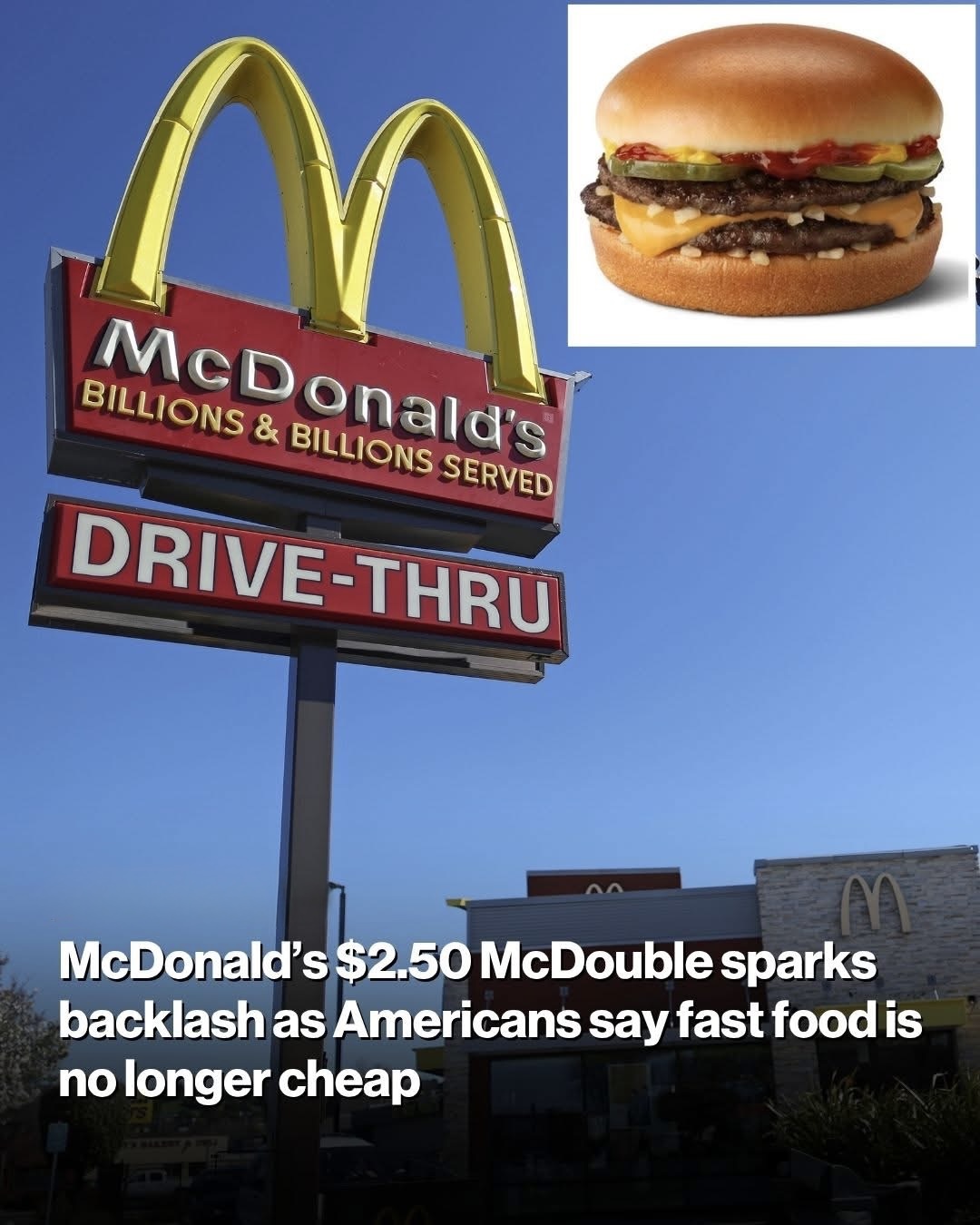
McDonald’s $2.50 McDouble sparks backlash as Americans say fast food is no longer cheap
McDonald’s is offering a $2.50 McDouble for a limited time on its McValue menu — but some customers argue the so-called “deal” highlights how far fast food prices have climbed.
“On social media, some folks have voiced their distaste for McDonald’s seemingly never-ending price increases, claiming that customers are falling for the old switcheroo,” The Takeout reported.
Anyone remember when McDoubles used to be 99 cents? It was only 10 years ago,” a Reddit user wrote, in part.“Thing was a dollar, they sell billions of burgers, and I’m supposed to be impressed by $2.50?” said a commenter on X.
McDonald’s maintains, however, that it is committed to “delivering great value” to its fans.
“Our focus has always been on listening to our customers and meeting their needs,” McDonald’s USA told Fox News Digital in a statement.
That’s why McValue was built as a flexible platform designed to evolve with them.The under $3 menu delivers on what they’ve told us matters most: consistently great prices on their favorite items and the freedom to order what they want, when they want — no bundling required.”
Others chimed in on a Reddit thread to say, “Once they get rid of 2 for 6 McMuffins, I’m not going anymore.”
They went in the wrong direction,” someone else said. “Affordability is not getting less for more. I def have eaten the breakfast sandwich 2nd for $1 quite a bit and will not return until an equal or better value is offered.”“With you on all of this,” another commenter wrote. “Loved the chicken nuggets, and I’d do the ‘get a free fry with purchase of a drink’ — it was beautiful.”
The level of food price inflation between February and March 2026 “varied depending on whether the food was purchased for consumption at home or away from home,” according to US Department of Agriculture data. -
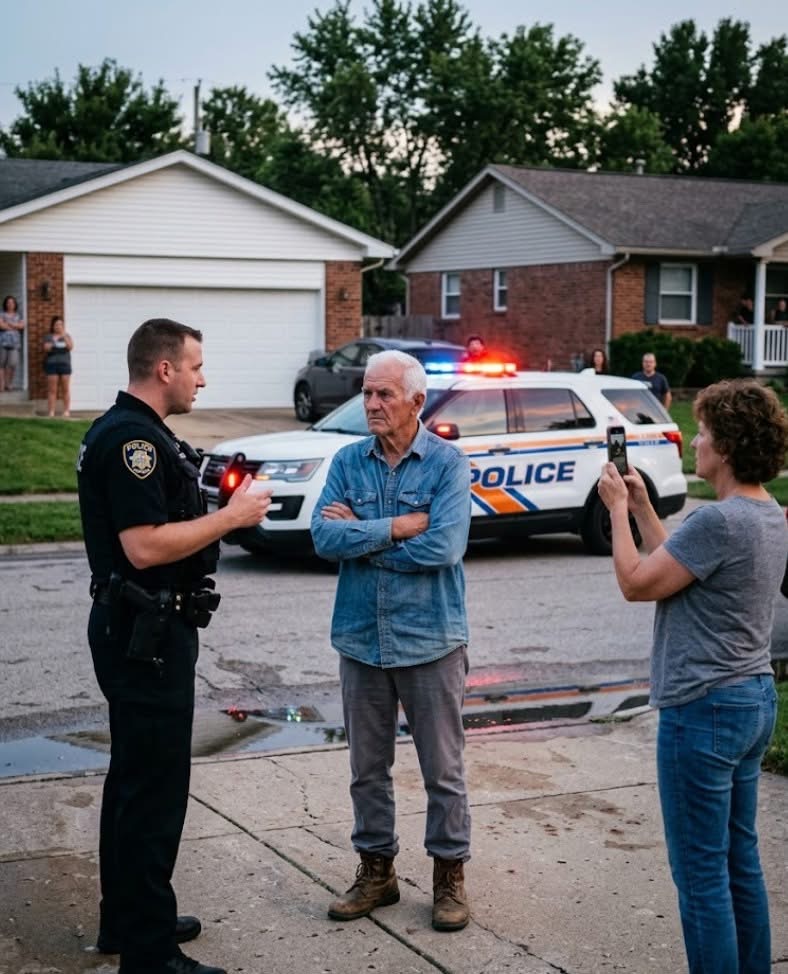
Angry Neighbors Called Authorities Before Uncovering An Incredible Secret Dog Sanctuary
Suspicion clouded our quiet suburban street the morning local authorities arrived at the home of my seventy two year old father Walter. Led by Mrs Donnelly, a neighbor constantly recording others with her phone, a crowd gathered expecting to uncover a terrible scandal. For years they watched my father take in elderly rescue dogs that were never seen again, sparking rumors that he was improperly getting rid of them for profit. As his son Pete, I was visiting from three hours away and stood frozen as two officers presented a search warrant. Without arguing my father calmly grabbed his keys and led the officers toward the heavy side door of his garage.
Stepping inside the garage left everyone completely speechless. Instead of the neglected environment the younger officer braced for, the room was a beautiful sanctuary of absolute dignity. There were no cages or signs of mistreatment anywhere. The walls were carefully lined with custom wooden sleeping berths, each sanded perfectly smooth and equipped with thick blankets and clean ceramic bowls. Above every resting space my father had painted names in neat handwriting including Daisy, Ranger, Millie, and Duke. Below their names were the specific years he had cared for them, revealing the true nature of his private work.
At the back of the room stood a massive board covered in hundreds of photographs honoring senior dogs and medical cases that local shelters struggled to place. Beneath each picture were careful notes such as recording how one dog waited four hundred seventeen days or noting how hand feeding Rosie brought her comfort. My father explained that after my mother passed away twenty six years ago the house grew too quiet and he simply wanted to ensure these older animals experienced genuine kindness. The younger officer looked tearful as he examined a meticulously labeled shelf of worn tennis balls and frayed ropes.
Outside the angry neighborhood crowd went entirely silent and Mrs Donnelly lowered her phone in deep shame. In the back corner I noticed one empty berth with a perfectly folded blanket placed under a small lamp and a framed photograph of my mother. When I asked my father why he kept this incredible dedication a secret he gently noted that I had simply never asked him about it. The police issued a commendation rather than an arrest and as the embarrassed neighbors walked away I decided to stay. I picked up a drill and some lumber to finally help my father continue his beautiful legacy. -
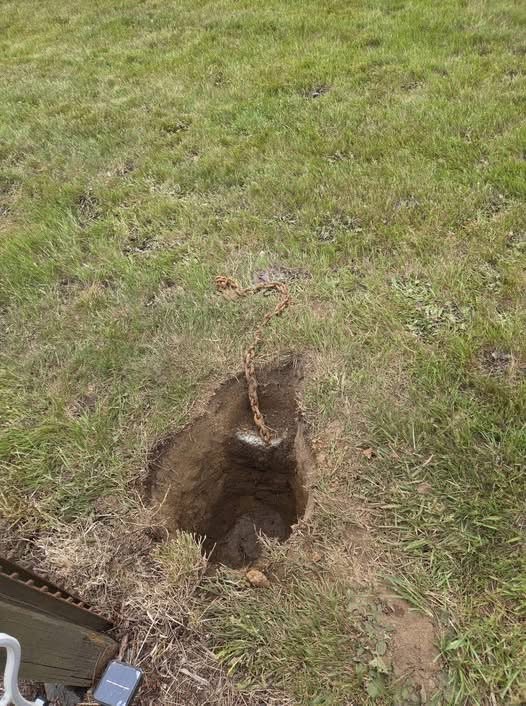
The Unyielding Link Beneath the Soil and the Hidden Architecture of Rural Defiance Against the Reckless and the Anonymous
I recently found myself confronting a stubborn relic of the past while replacing the weathered, leaning mailbox at the end of my driveway. As I dug into the earth to remove the cracked wooden post, my shovel struck something unexpectedly solid, sending a jolt through my arms and a brief, thrilling thought of buried treasure through my mind. However, as the dirt cleared, I realized I hadn’t found gold, but rather a thick, rusted metal chain buried eight inches beneath the surface. It was a rural mailbox anchor—an ingenious, low-tech solution born from the absolute necessity of protecting property in an environment where the isolation of country roads often invites mindless destruction.
Growing up in the countryside, I witnessed firsthand how mailbox vandalism was often treated as a rite of passage for restless teenagers. It was a costly and exhausting cycle for homeowners, who frequently woke up to find their essential fixtures obliterated after a weekend of revelry. In response to this financial burden, rural residents began to prioritize self-defense and physical resilience, turning their mailboxes into formidable opponents. We saw posts filled with concrete, reinforced with heavy steel pipes, or, as in the case of my own yard, anchored deep into the ground with heavy-duty chains. This wasn’t just a maintenance task; it was a cultural statement of grit against the anonymity of rural mischief.
As I tugged on the chain and felt it firmly resist my efforts, I realized that I was touching the legacy of the person who lived here before me—someone who had clearly faced the same frustrations and responded with grassroots ingenuity. I ultimately decided to leave the anchor buried, acknowledging that physics remains a far more unwavering ally in these parts than modern technology. While a speeding truck might not be deterred by a camera or a motion sensor—especially in areas where cellular signals are a luxury—it can certainly be halted by the sheer, immovable physicality of a well-anchored post. It is a pragmatic balance between security and the law, proving that sometimes the oldest methods are the most reliable.
This hidden piece of history is a silent testament to the tenacity that defines rural life, where neighbors share resources and ideas to solve common problems collaboratively. The chain represents a broader narrative of community spirit, a reminder of a time when people protected their shared spaces without the need for elaborate high-tech systems. As I stand by my new mailbox, I feel a profound connection to the generations of residents who understood that resilience comes from being grounded. It is a link between our past and our future, reminding us that while the complexity of modern life grows, the fundamental values of resourcefulness and shared responsibility remain the most enduring answers of all. -
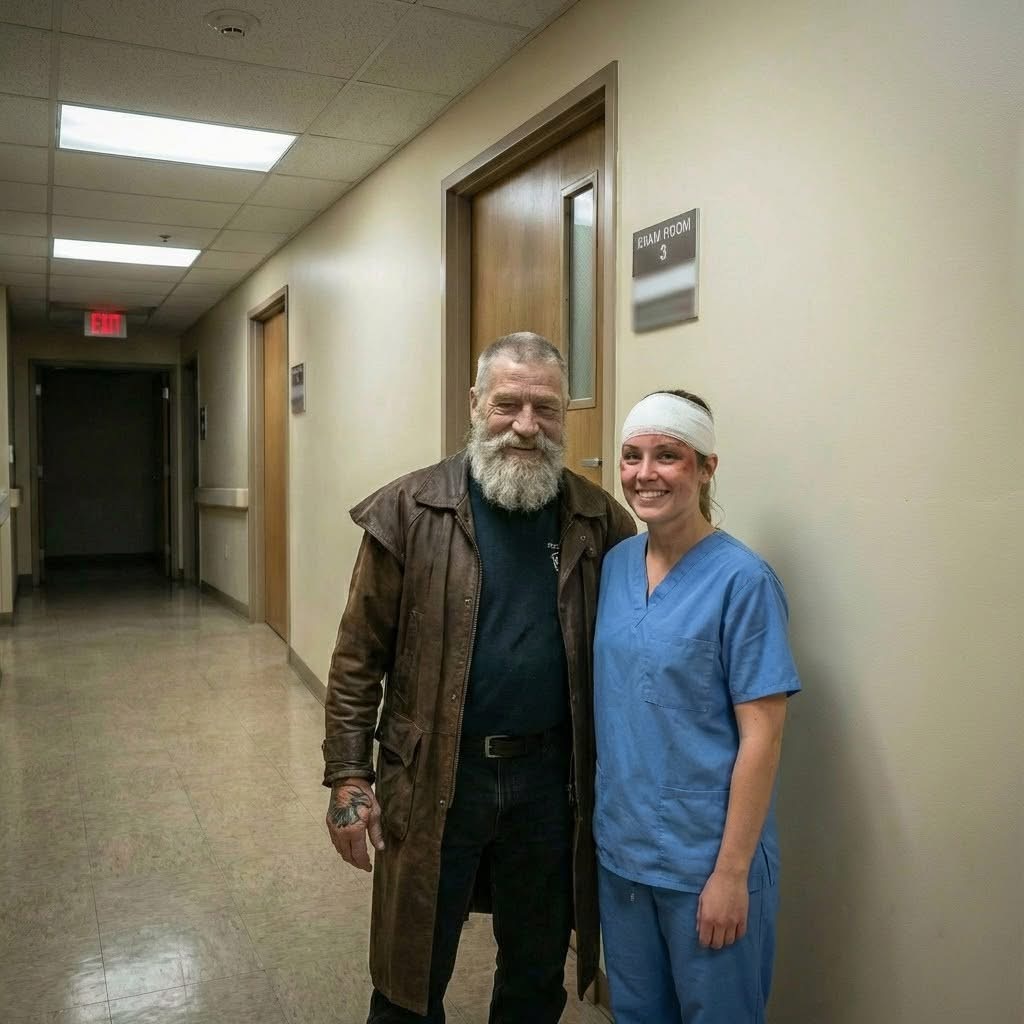
The Iron Guardian of the Hospital Garage and the Heavy Silence of a Debt Paid in the Midnight Shadows
I was walking to my car after an exhausting eleven-hour nursing shift, the silence of the hospital parking garage suddenly shattered when a stranger grabbed me from behind and began dragging me toward the dark void of a stairwell. I couldn’t scream or fight against his overwhelming strength, but just as the air was leaving my lungs, a blinding motorcycle headlight cut through the gloom like a localized sun. A man named Marcus—a biker with leather-clad shoulders and knuckles scarred by a lifetime of hard miles—lunged into the fray, pulling the attacker off me with a single, decisive motion. He didn’t ask questions or demand credit; he simply ensured the predator fled into the night and then draped his heavy, grease-scented jacket over my shivering shoulders, shielding me from the cold terror of the immediate aftermath.
He stayed with me through every agonizing step of the police report and the medical exam, sitting in chairs far too small for his frame until my roommate finally arrived hours later to take me home. I assumed that was the end of a random act of extraordinary kindness, but when I showed up for my next shift, I found Marcus waiting in the lobby, a silent, iron sentry committed to my safety. For two weeks, he appeared at the end of every shift, walking three paces behind me until I was safely locked inside my car, never asking for anything and never intruding on my space. It was a vigilant, wordless protection that turned the sterile hospital hallways into a place where I could breathe again, anchored by the presence of a stranger who refused to let me face the darkness alone.
On the fifteenth night, I finally confronted him about his relentless dedication, and his answer revealed a weight of guilt that had been anchored in his chest for over a decade. He confessed that he was doing this because he “should have been there sooner”—a reference to a past moment where he heard a scream in the night and hadn’t run toward it, a failure that had haunted his conscience and redefined his sense of self. That missed opportunity had led to another woman named Kate suffering a tragedy he believed he could have prevented, and by protecting me, he was finally attempting to pay a debt he felt he owed to the world. He eventually introduced me to Kate and her mother, Helen, bridging the gap between his regret and our shared survival, proving that some heroes aren’t born from a place of perfection, but from the desperate, human need to make things right.
Three years later, our lives have been stitched together into an accidental family born from that initial moment of parking-garage terror, where we meet for monthly dinners to celebrate our collective, hard-won healing. Kate has turned her trauma into a mission by starting a survivor-advocacy nonprofit, and Marcus has found a lightness in his spirit that his wife, Linda, says he hasn’t felt in a lifetime. I realized that Marcus didn’t just save me once; he stayed for years, showing me that surviving a tragedy is only the first step—you have to find a way to truly live again. He taught me that real courage isn’t found in a single dramatic gesture, but in the quiet, stubborn choice to pay attention and show up for someone else, even when the shadows feel too deep to penetrate. -
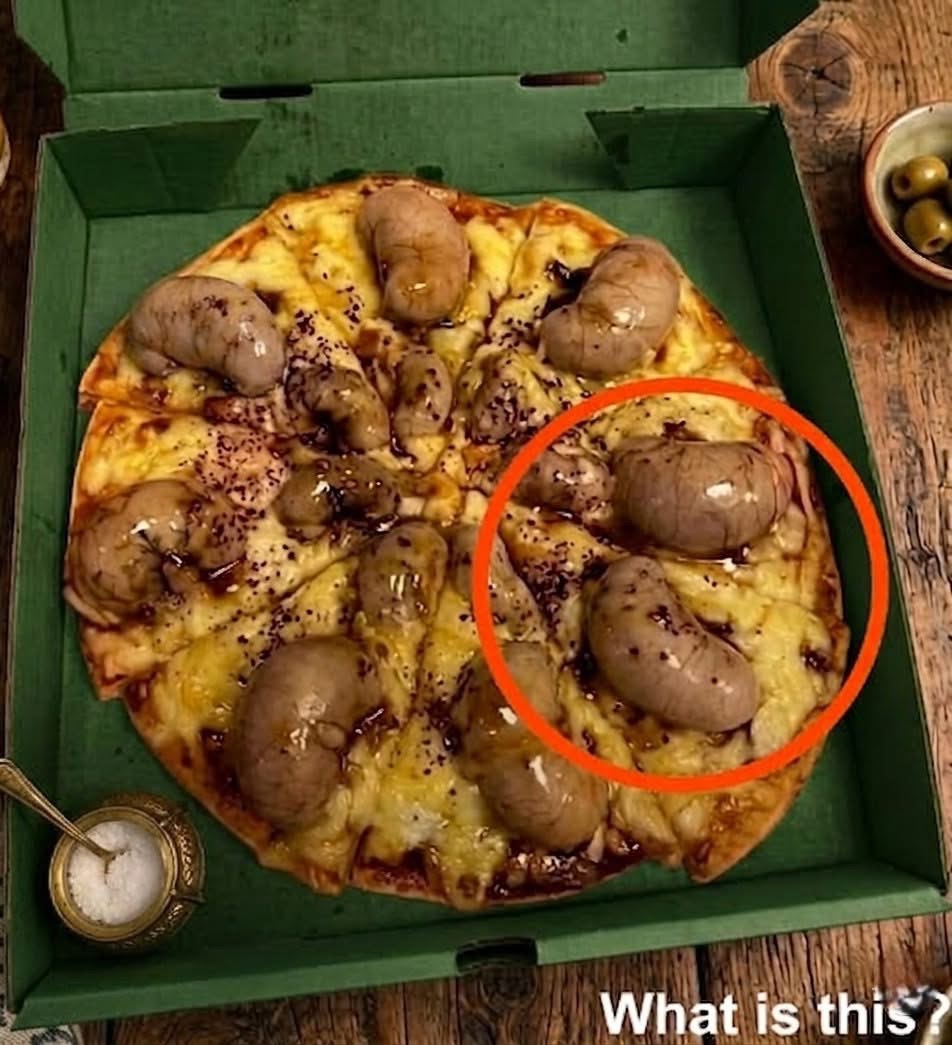
I Ordered a Pizza in the Evening—When the Delivery Driver Brought It to Me, a Simple Moment Unfolded Into an Everyday Story of Convenience
For a few long seconds I just stared, my appetite wrestling with pure suspicion, as if I were no longer just looking at a pizza but at something that had quietly shifted categories in my mind from “food” to “unknown object.” The “blisters” looked like strange organs trapped under the cheese, smooth and inflated, catching the light in a way that made them seem almost deliberately formed rather than naturally occurring. It was the kind of visual detail that your brain latches onto and refuses to let go of—tiny domes of pale gold and slightly browned cheese rising unevenly across the surface, each one suggesting a hidden interior pressure that I couldn’t immediately explain.
I remember thinking that if I had walked into the room without knowing what it was, I might not have identified it as pizza at all in the first second or two. That realization alone was enough to create a strange discomfort, because so much of how we trust food is based on immediate recognition. If something looks familiar, we relax. If it doesn’t, even slightly, we begin to question everything about it. I leaned closer, narrowing my eyes as if distance was the problem, as if changing perspective would somehow restore order to what I was seeing. But instead of clarifying things, the closer inspection only made the texture more complex—the glossy surface of melted cheese, the uneven air pockets, the faint bubbling frozen mid-collapse like small geological events preserved in cheese. My imagination started filling in gaps faster than my reasoning could correct them, producing half-formed ideas about contamination, failed recipes, or something going wrong in the cooking process that no one had noticed until now.It reminded me that perception is not a fixed truth but a process, constantly shaped by knowledge, expectation, and the quiet space between not knowing and understanding.